Restaurant Reputation Management Best Practices
Negative Review Response Framework for Restaurants

Make online feedback your fastest route to truth—and to growing traffic
Best practices on how to respond to negative restaurant reviews from leading brands
Online reviews are where brand promise hits lived experience. This framework exists to help large restaurant brands treat negative reviews like a disciplined operating process—not a sporadic PR exercise. The goal: win back today’s guest in public, fix the root cause for tomorrow’s guest, and prove (internally and externally) that your experience reliably matches your marketing.
Why prioritize negatives? Because volume-adjusted complaint density is tightly tied to traffic.
Black Box Intelligence analysis shows that units with fewer complaints per customer now outperform peers on traffic—even more than units with the most compliments per customer.
In 2019, the top quartile on compliments ran +0.4% better traffic, but the top quartile with the fewest complaints ran +1.3%. In 2025 the spread widened: units with the most compliments actually saw –3.7% traffic growth vs. peers, while those with the fewest complaints ran +2.2% better.
Translation: you can inflate praise; it’s hard to fake fewer problems—so fixing negatives pays. This framework focuses specifically on online reviews (Google, Yelp, first-party platforms) and is designed to complement how you respond to positive reviews. Use them together: thank and amplify what works; acknowledge and eliminate what doesn’t.
Implementing in its entirety may be unrealistic for some brands, but it provides key focus areas for you to leverage to improve how you currently act on – and respond to – the negative restaurant reviews you receive.
The guidance in this framework is sourced from a roundtable of marketing leaders from the restaurant industry, who spoke under the condition of anonymity.
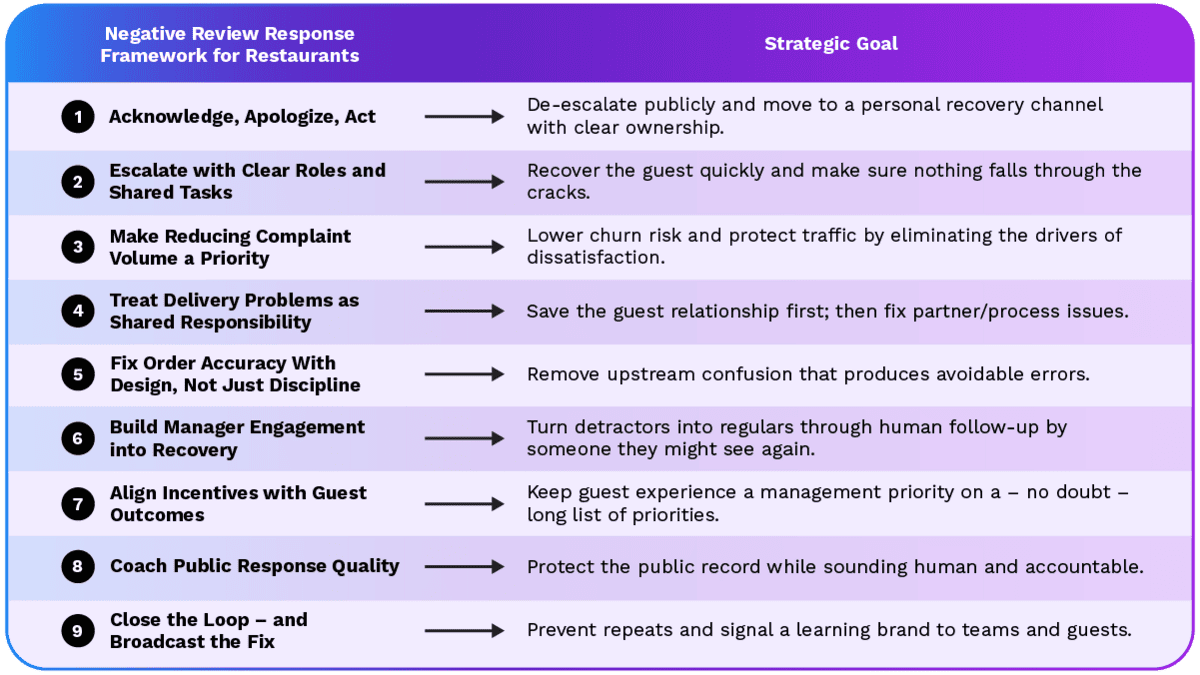
1) Acknowledge, Apologize, Act
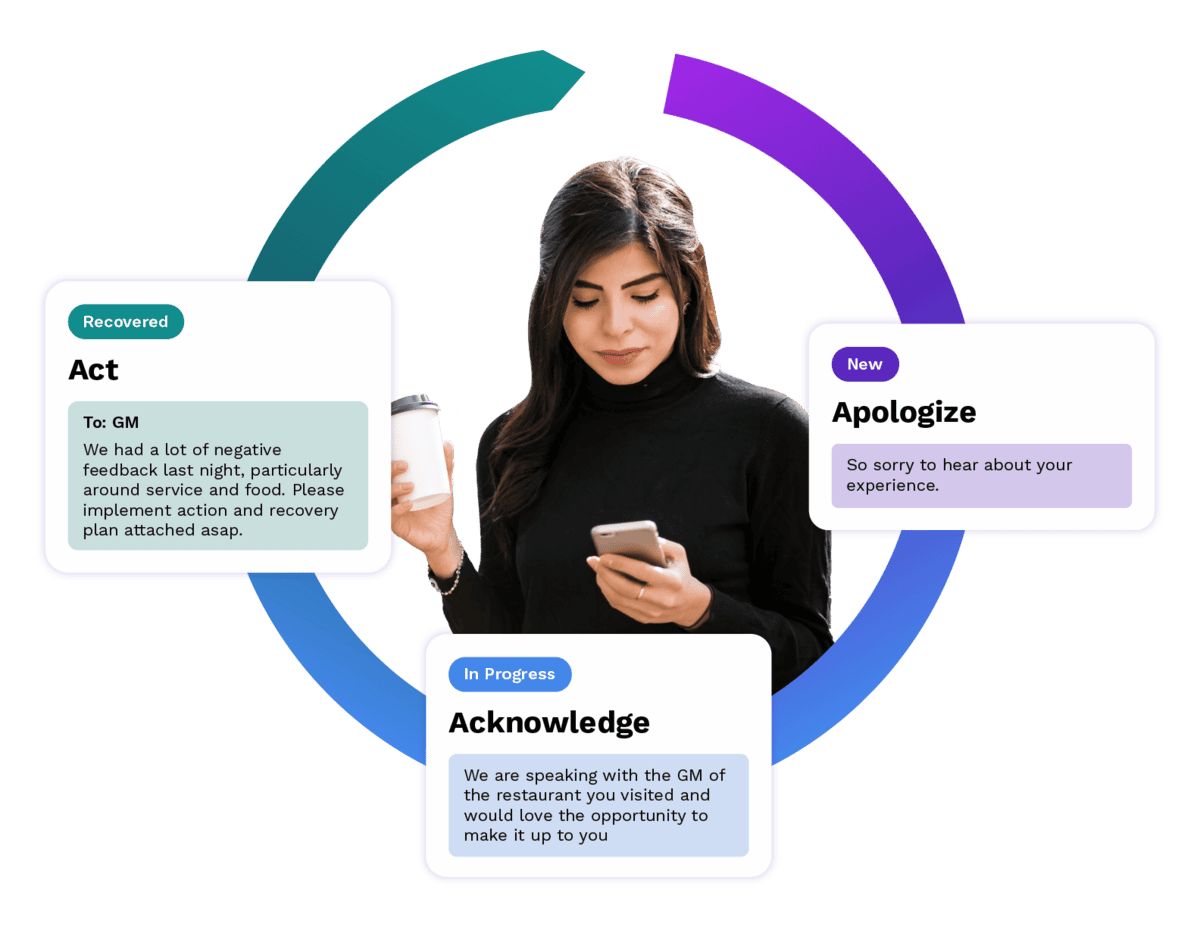
What we mean: This is your first, public de-escalation move. Respond quickly, own the issue, and provide a clear path to a one-to-one recovery. You’re signaling to the reviewer—and all future readers—that your brand is attentive and accountable.
Strategic goal
De-escalate publicly and move to a personal recovery channel with clear ownership.
Why it matters
Silence or defensiveness fuels pile-ons. It’s a story as old as the internet. A crisp, human reply makes it safe for the guest (and onlookers) to give you a second chance.
What great looks like
- Extensive team enablement: Provide detailed guidance, templates and tools to enable team members to respond effectively and consistently.
- SLA: Respond in hours, not days; immediate priority for safety/allergen claims.
- Tone: Specific, brief, non-defensive; no excuses or policy lectures.
Tips for execution at scale
- Taxonomy: Tag reviews by cause (missing item, wait time, attitude, temperature, allergen, delivery).
- Alerts: Automated distribution of negative reviews to GMs, marketing and whoever else should take action on it. Auto-escalate high-risk tags to leadership.
- Metrics: Monitor key metrics such as time-to-first-response, time-to-resolution, make-good cost per case etc. You don’t need to track a ton of metrics, but make sure you’re tracking what you need to get a grip on your ability to correct negative review trends in your business.
2) Escalate with Clear Roles and Shared Tasks
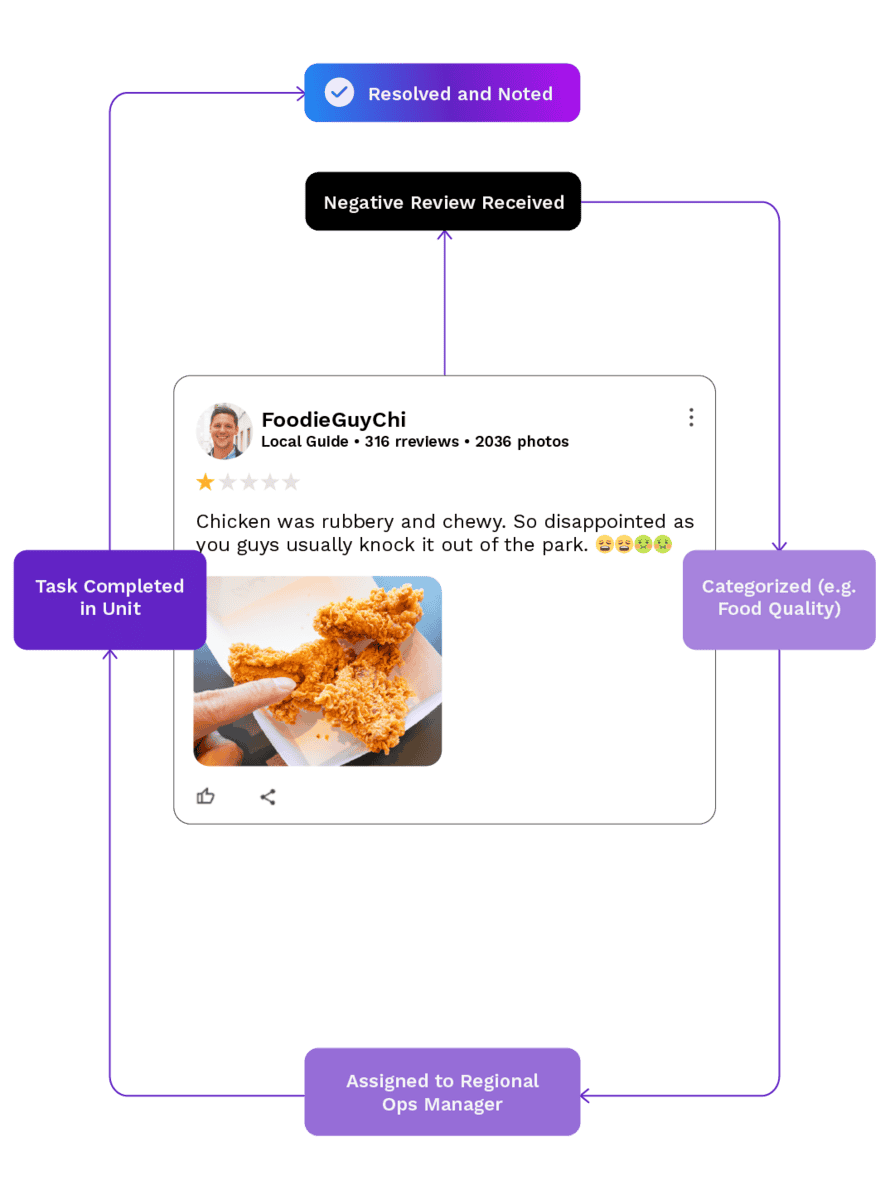
What we mean: Every negative review becomes a trackable case, with assigned ownership and clearly reported outcome. The goal is to recover the guest quickly and ensure the learning doesn’t get lost in email.
Strategic goal
Recover the guest quickly and make sure nothing falls through the cracks.
Why it matters
Ambiguity creates inconsistent or – worse – nonexistent follow-up and no root-cause learning.
What great looks like
- One case = one task with owner, timestamps, actions, and outcome.
- Smart routing: Auto-assign by unit + issue; GM/DM owns outreach; guest care/marketing supports.
Tips for execution at scale
- SLAs: These should be tailored to your specific business but aim for a time target for GM outreach to the individual that provided the review, and a target for resolution. Then manage to these SLAs consistently.
- Single source of truth: All notes and contact attempts live in a central widely-accessible system, not inboxes.
- Ops cadence: Weekly review of overdue tasks and repeat themes by region.
3) Make Reducing Complaint Volume a Priority
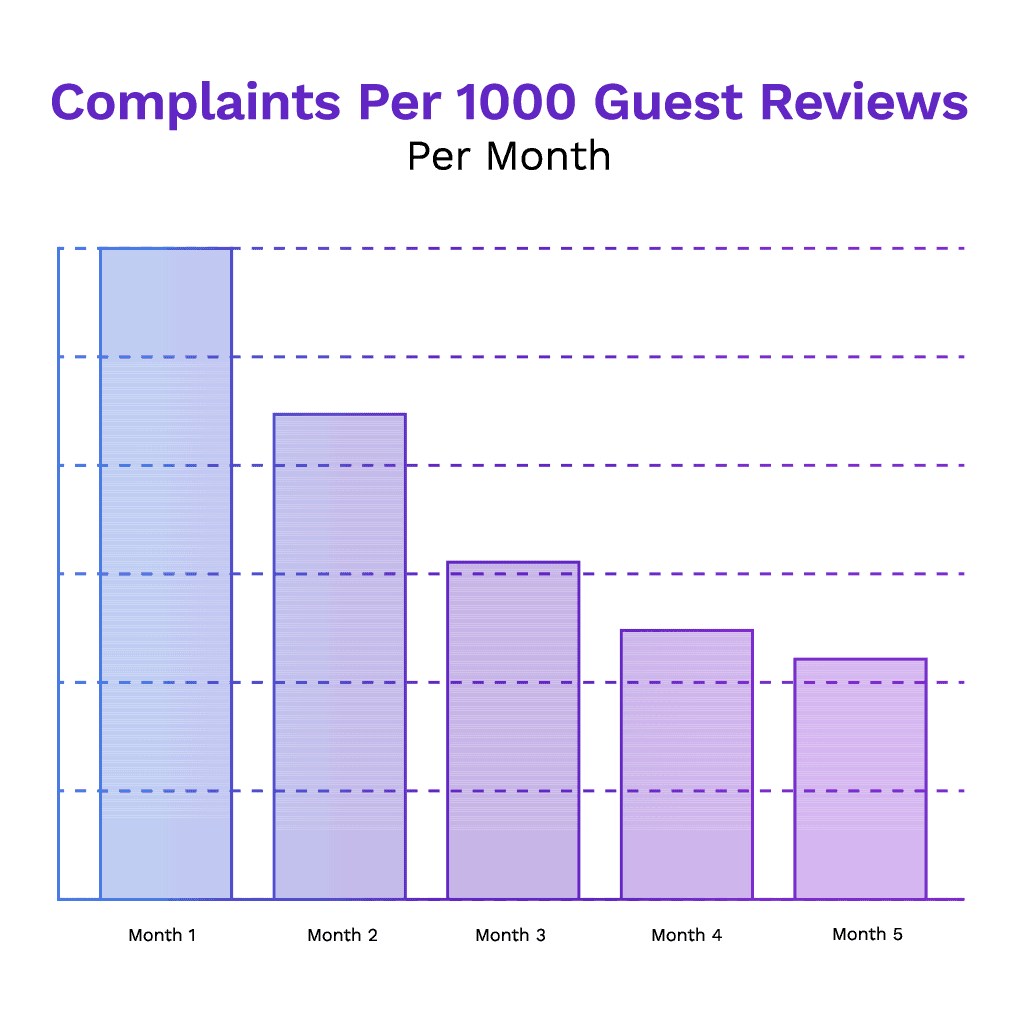
What we mean: As per our research, the overarching metric that matters is fewer negative reviews per 1,000, not more compliments/positive reviews. This has been proven – through BBI data – to have a significantly more meaningful lever for traffic growth. So target the most common complaint drivers and remove them systemically.
Strategic goal
Lower churn risk and protect traffic by eliminating the drivers of dissatisfaction.
Why it matters
Fewer complaints per guest correlates more strongly with traffic than more compliments do.
What great looks like
- Consistent tracking: Report and share results on a frequent cadence that cover both short-term performance and long-term. Make complaints per 1,000 reviews a key metric.
- Monthly “safe-space” calls: If it aligns with your internal culture, peer problem-solving for underperforming units can help a lot.
Tips for execution at scale
- Each flagged unit picks two complaint themes to attack per period (not ten).
- Provide a menu of proven fixes; require before/after notes.
- Track theme volume deltas and resolution times; publish league tables.
4) Treat Delivery Problems as Shared Responsibility
What we mean: Whether or not your team caused it, the guest expects you to fix it. Make good now, then pursue courier/partner remediation in the background.
Strategic goal
Save the guest relationship first; then fix partner/process issues.
Why it matters
Guests often blame the restaurant and courier equally, regardless of fault.
What great looks like
- Immediate make-good (refund/remake/credit) with a clear note that you’re also addressing the courier/3P partner.
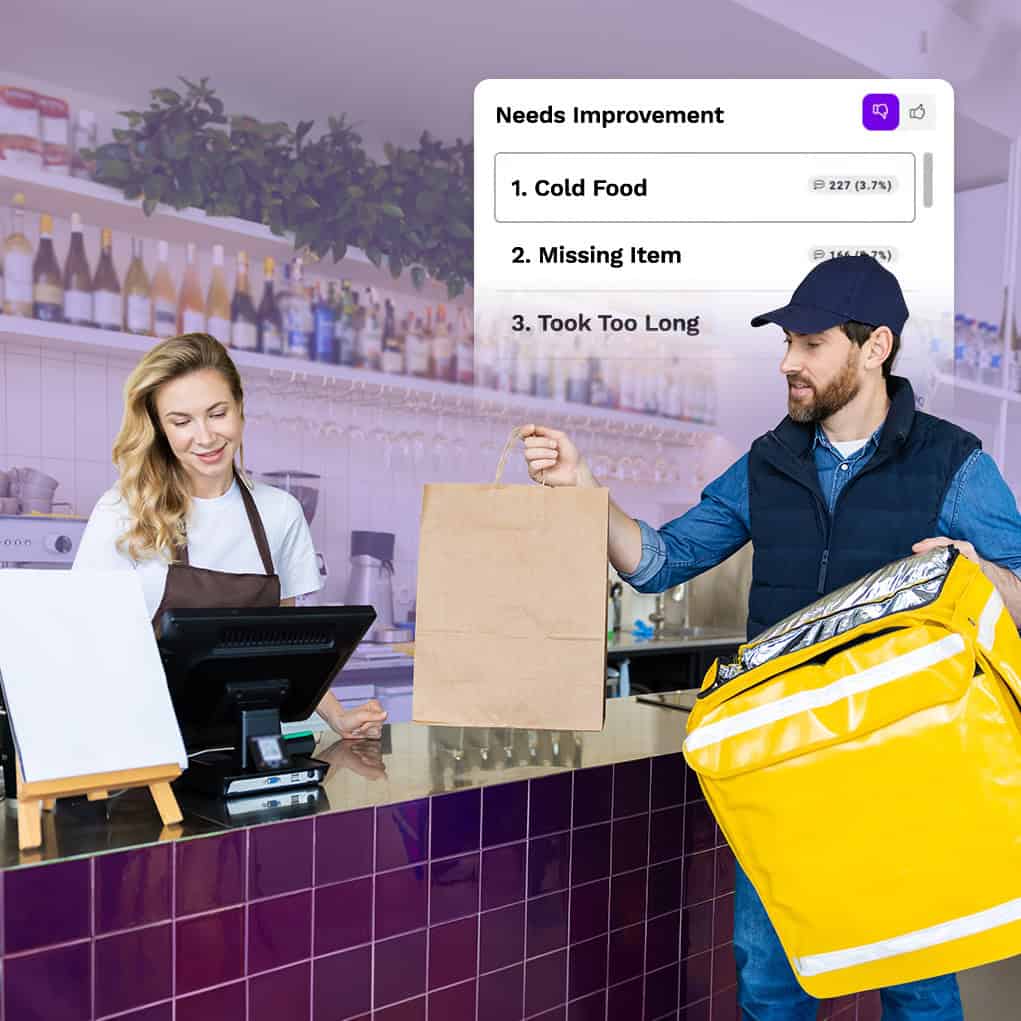
- Preset scenarios: Missing drink, cold food, wrong address etc. – each with approved make-good options.
Tips for execution at scale
- Evidence: Use order logs and, when appropriate, other data (such as wait, journey time, items ordered) to establish correlations and trends.
- Partner ops: Keep warm contacts and agreed SLAs with delivery partners. And then work to ensure the SLAs are met.
- Tracking: Track partner-attributed defects per 1,000 orders; know how this stacks up in comparison to your standard numbers and escalate chronic issues with your vendor.
5) Fix Order Accuracy With Design, Not Just Discipline
What we mean: Many “accuracy” issues start upstream – unclear item names, confusing modifiers, or ordering UI traps. Redesign so that the default choice is the correct one.
Strategic goal
Remove upstream confusion that produces avoidable errors.
Why it matters
Many “accuracy” misses start with item naming, modifiers, or ordering UI etc. – not just on the line.
What great looks like
- Add a “Did we get it right?” checkpoint to measure trend shifts.
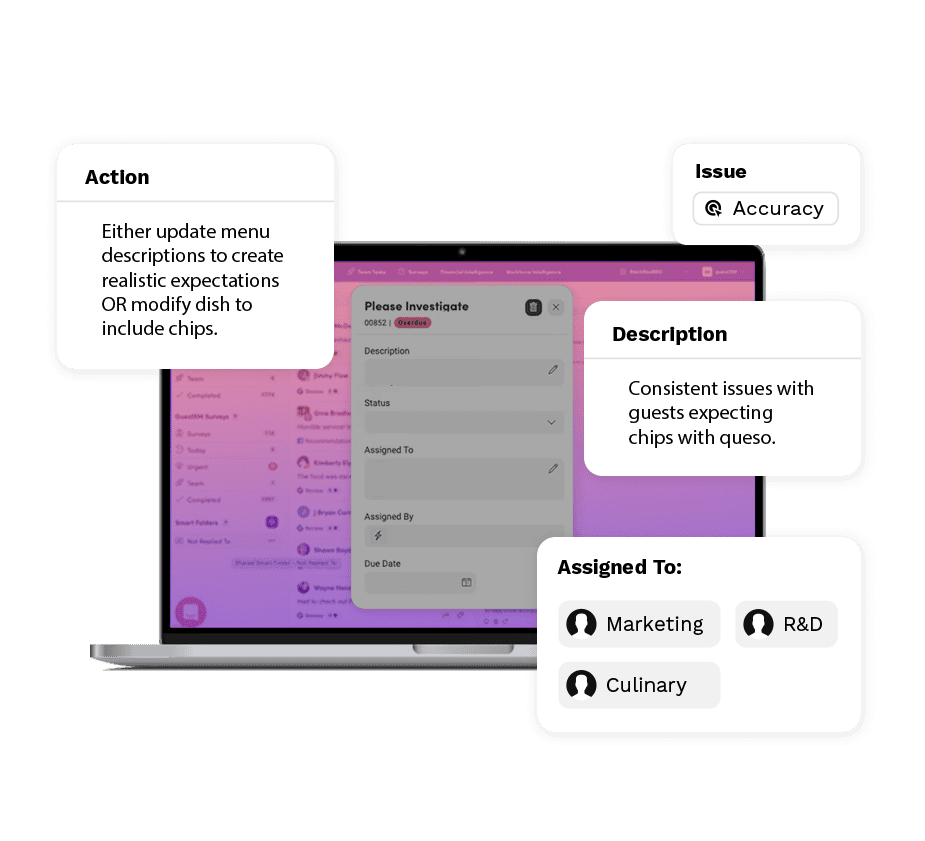
- Identify trap items (e.g., queso ordered without chips due to unclear options); rename/restructure to default to “right.”
Tips for execution at scale
- 30-day blitz in pilot markets; compare to matched controls.
- Tag “missing item,” “wrong modifier,” “UI confusion” until native classifications are live.
- Publish a UI/menu change log with screenshots to stores.
6) Build Manager Engagement into Recovery
What we mean: A real person, from the restaurant should follow up. That human contact is often the difference between a lost detractor and a returning regular.
Strategic goal
Turn detractors into regulars through human follow-up by someone they might see again.
Why it matters
Personal outreach boosts forgiveness and intent to return.
What great looks like
- On-site leader ideally calls or emails through the platform review was left the guest within 24h and logs the outcome.
Tips for execution at scale
- Regional leaders receive a daily sample of verbatims; call out manager mentions.
- Track who called, when, offer made, and guest disposition (won back/neutral/lost).
- Share save stories to reinforce the behavior.
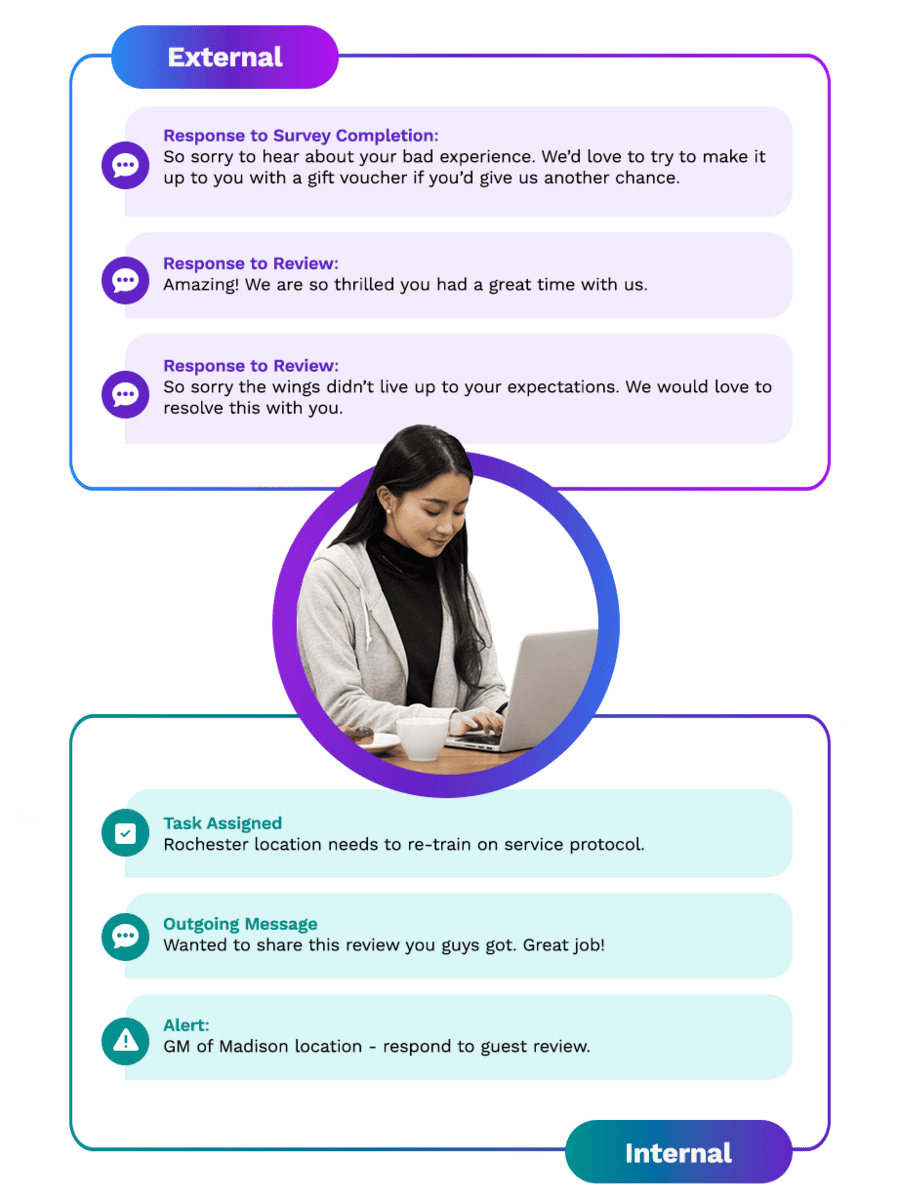
7) Align Incentives with Guest Outcomes
What we mean: If it’s important, pay for it. Tie part of manager bonuses to sentiment thresholds and targeted theme improvement so guest experience remains top priority.
Strategic goal
Keep guest experience a management priority on a – no doubt – long list of priorities.
Why it matters
Clear incentives focus attention and follow-through.
What great looks like
- Quarterly bonus gates tied to sentiment thresholds and targeted complaint theme improvement.
- Windows sized for volume—quarterly beats monthly for most brands.
Tips for execution at scale
- Transparency: Publish formulas and review windows; avoid moving targets.
- Enablement: Pair incentives with playbooks and templates managers can execute.
- Dashboards: Simple monthly view: standing + two focus areas.
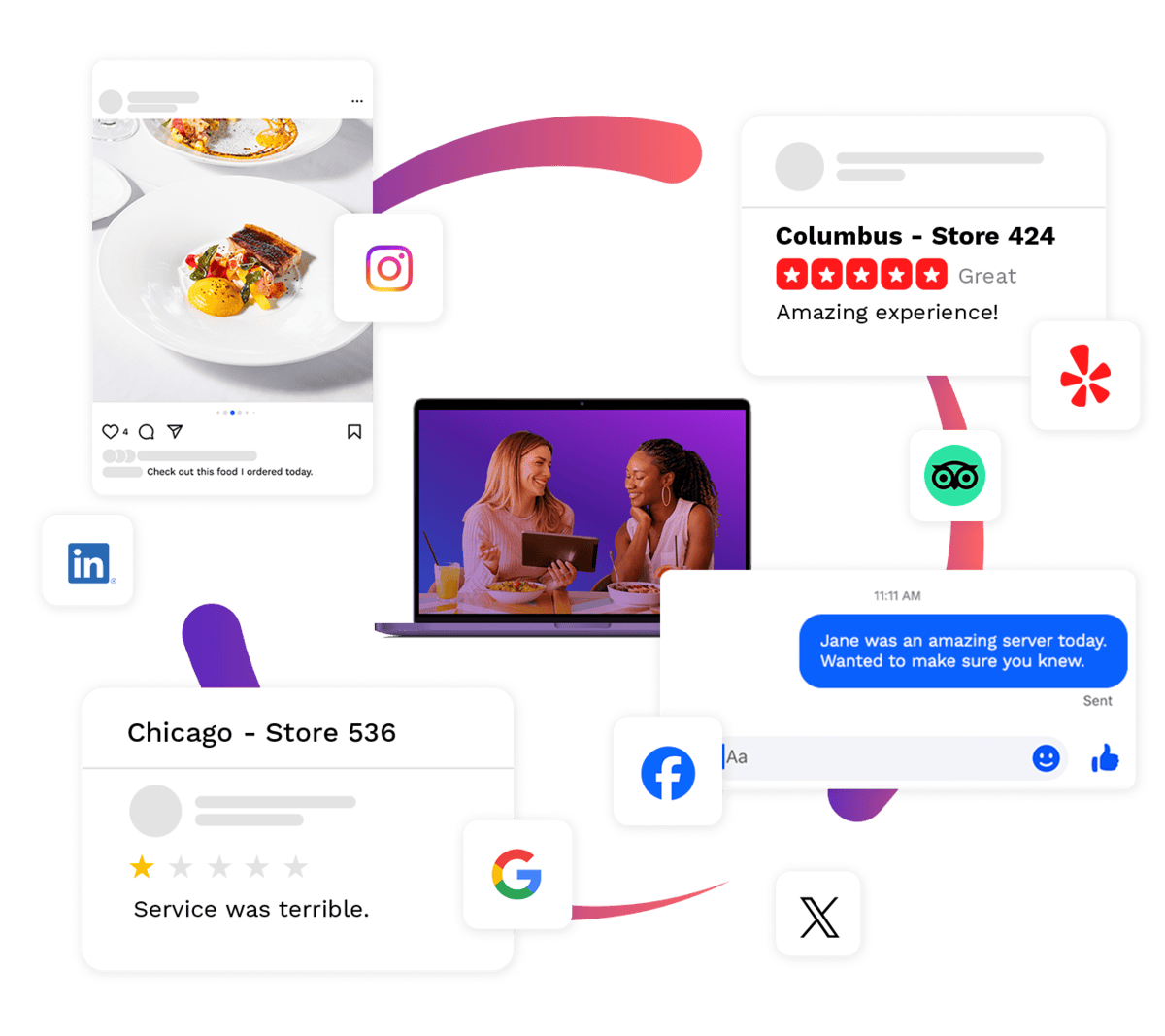
8) Coach Public Response Quality
What we mean: Your replies live forever. Establish brand standards that make every response feel human, accountable, and consistent – without over-promising.
Strategic goal
Protect the public record while sounding human and accountable.
Why it matters
A clumsy reply can do more damage than the complaint itself.
What great looks like
- Concise, specific, non-defensive replies; no over-promising.
- Clear escalation rules for complex cases (allergens, legal, harassment).
Tips for execution at scale
- Quarterly workshops or summary comms using real replies; keep a library of examples.
- Templates for common scenarios (missing item, long wait, incorrect prep, attitude) with personalization tokens.
- Leverage AI: Specific restaurant and brand-trained AI can make every response personal yet ensure consistency across your entire brand.
9) Close the Loop – and Broadcast the Fix
What we mean: Recovery isn’t done until the system changes and everyone knows it. Document the fix, measure the impact, and communicate the win.
Strategic goal
Prevent repeats and signal a learning brand to teams and guests.
Why it matters
Recovery isn’t done until the system changes—and people know it changed.
What great looks like
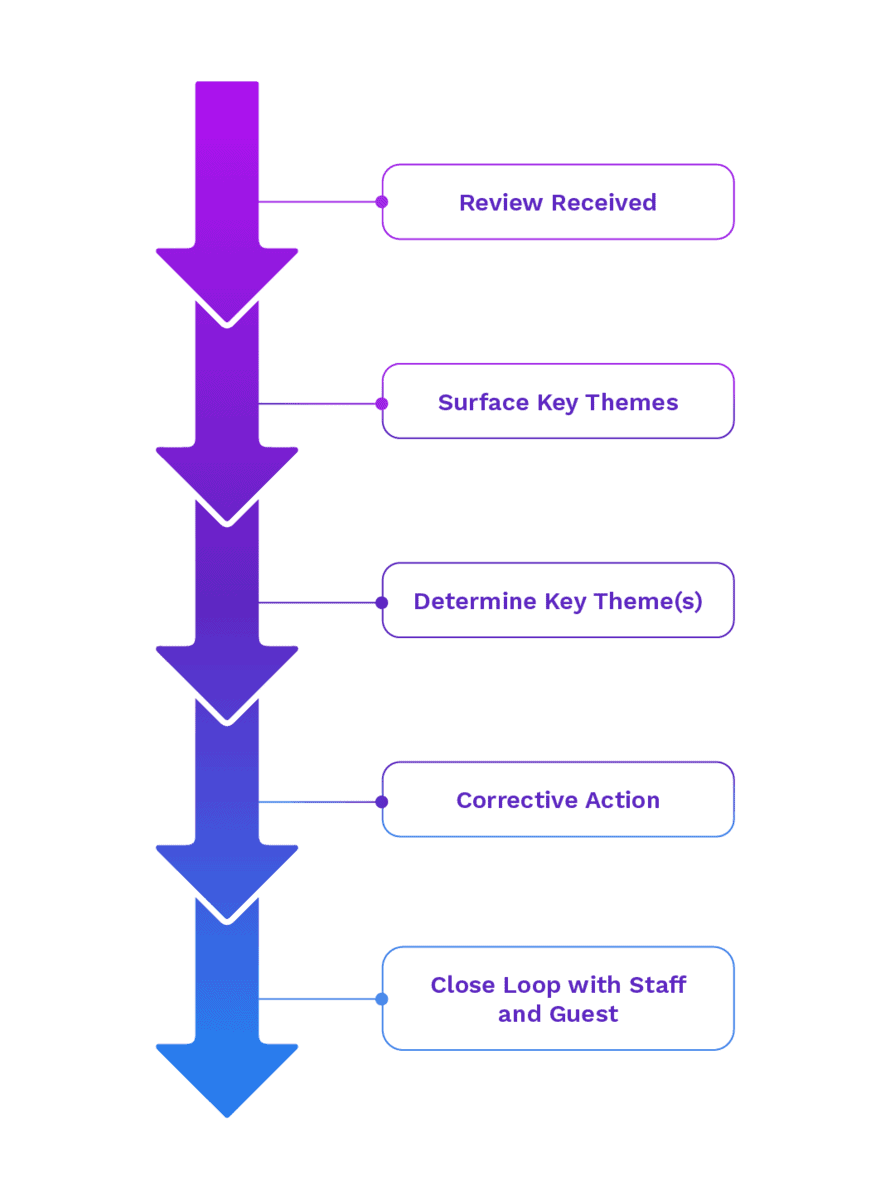
- Every case ends with root cause, corrective action, and guest outcome; tag by theme.
- Weekly “This week we fixed…” notes in pre-shift; replicate across similar units; re-measure after two weeks.
Tips for execution at scale
- Ownership: Every fix has an owner and date—no orphans.
- Metrics: Show before/after complaint volumes; celebrate reductions.
- Portfolio management: Retire low-impact actions; double-down on high-impact fixes.
Reduce Complaints With Focused Improvement
When you prioritize actioning and responding to negative restaurant reviews you protect traffic and credibility.
While running this framework in its entirety may not make sense for you, it provides key strategic focuses for you to take your negative review response strategy to a next level.