Restaurant Reputation Management Best Practices
Positive Review Response Framework for Restaurants
Turn positive reviews into repeatable revenue
Best practices on how to respond to positive restaurant reviews from leading brands
Online praise is more than a pat on the back—it’s a blueprint for growth. This framework helps large restaurant brands treat Responding to Positive Restaurant Reviews like an operational discipline: acknowledge quickly, extend in-person hospitality into digital spaces, and deliberately capture what “great” looks like so you can reproduce it at scale.
Why invest here when complaint reduction protects traffic? Because positives show you what to reinforce. They surface the exact guest moments—menu items, team behaviors, ambiance cues—that deserve training time, marketing oxygen, and operational guardrails. Used alongside your Negative Review Response Framework, this playbook ensures the brand consistently amplifies delight while the negative framework eliminates friction.
The guidance in this framework is sourced from a roundtable of marketing leaders from the restaurant industry, who spoke under the condition of anonymity.
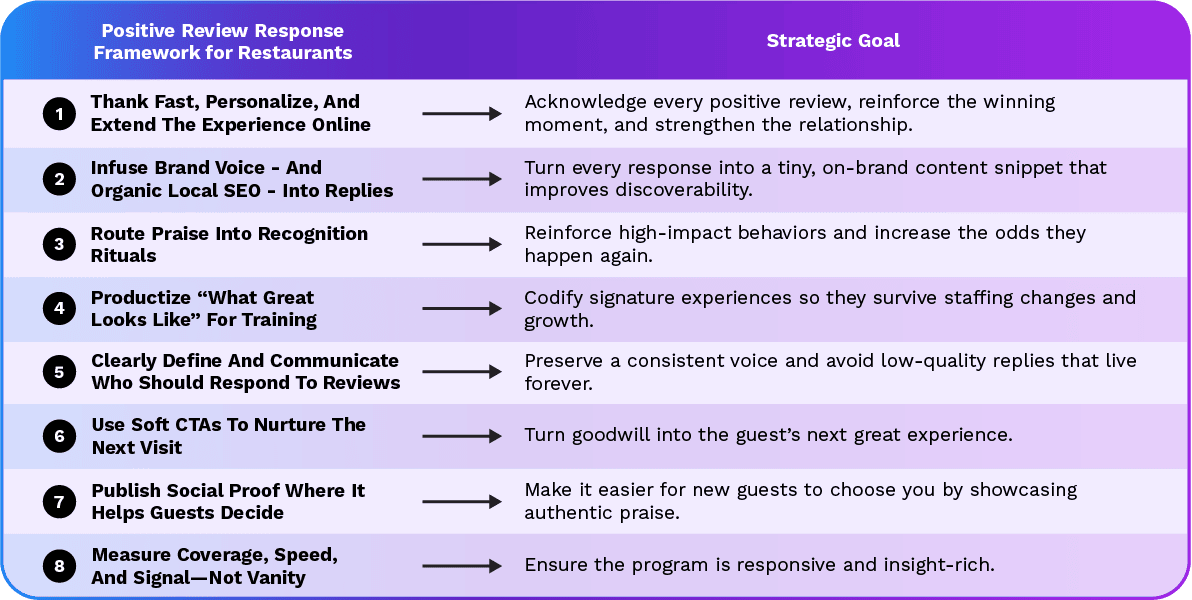
1) Thank Fast, Personalize, And Extend The Experience Online
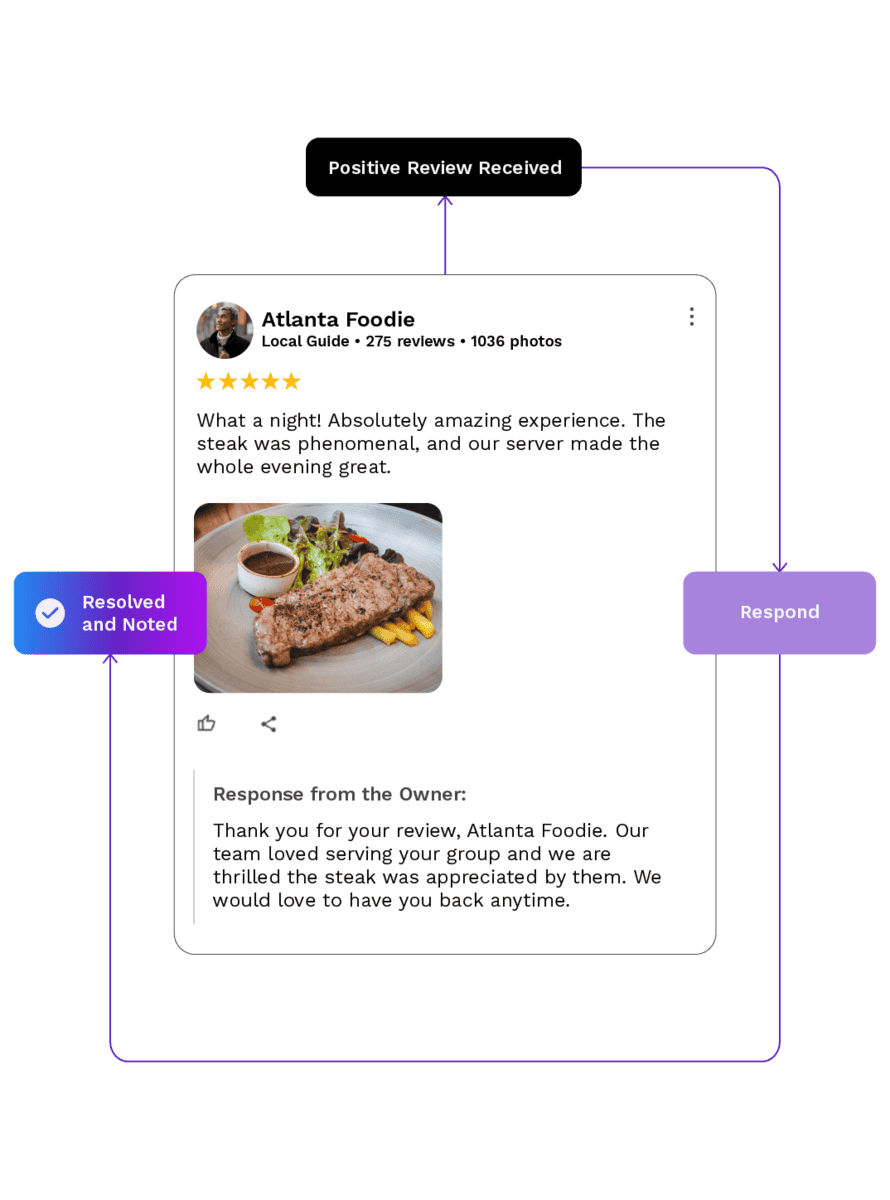
What we mean: Respond to positive reviews within hours, not days. Call out the specific details the guest mentioned (server behavior, dish, daypart, patio vibe) and carry your in-restaurant hospitality into your reply. It’s the same care – but delivered digitally.
Strategic goal
Acknowledge every positive review, reinforce the winning moment, and strengthen the relationship.
Why it matters
A fast, specific thanks turns a one-time compliment into loyalty. Future readers see a living, responsive brand rather than a static listing.
What great looks like
- Anatomy: name (if present) → specific detail → brand-true sign-off.
- SLA: coverage near 100%; responses in hours, not days.
- Tone: warm, efficient, never canned.
Tips for execution at scale
- Maintain a coverage dashboard (by site and unit).
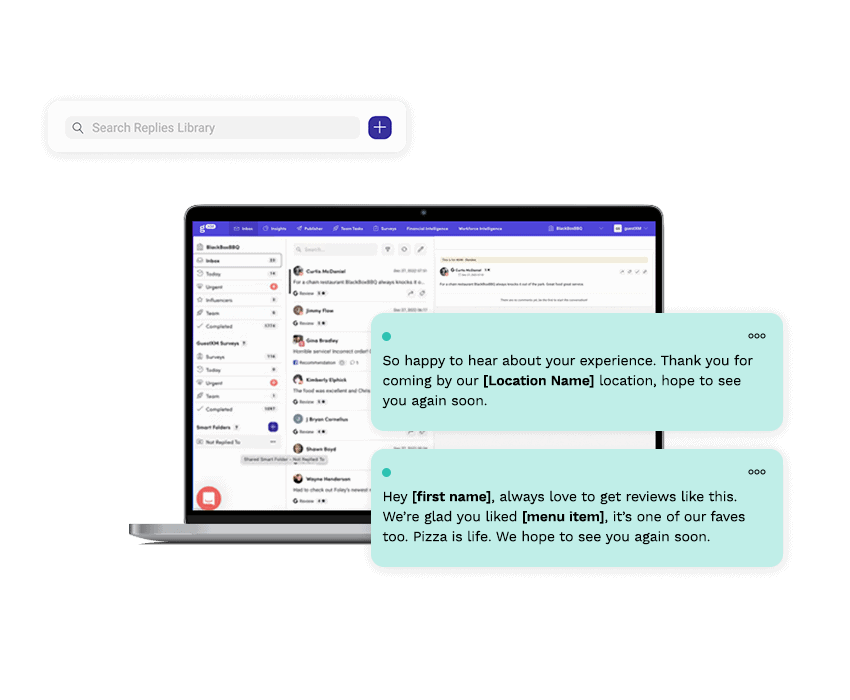
- Use lightweight templates with personalization tokens (item, location, occasion).
- Surface high-value reviews to store leaders for a quick “thanks” in person if the guest returns.
2) Infuse Brand Voice – And Organic Local SEO – Into Replies
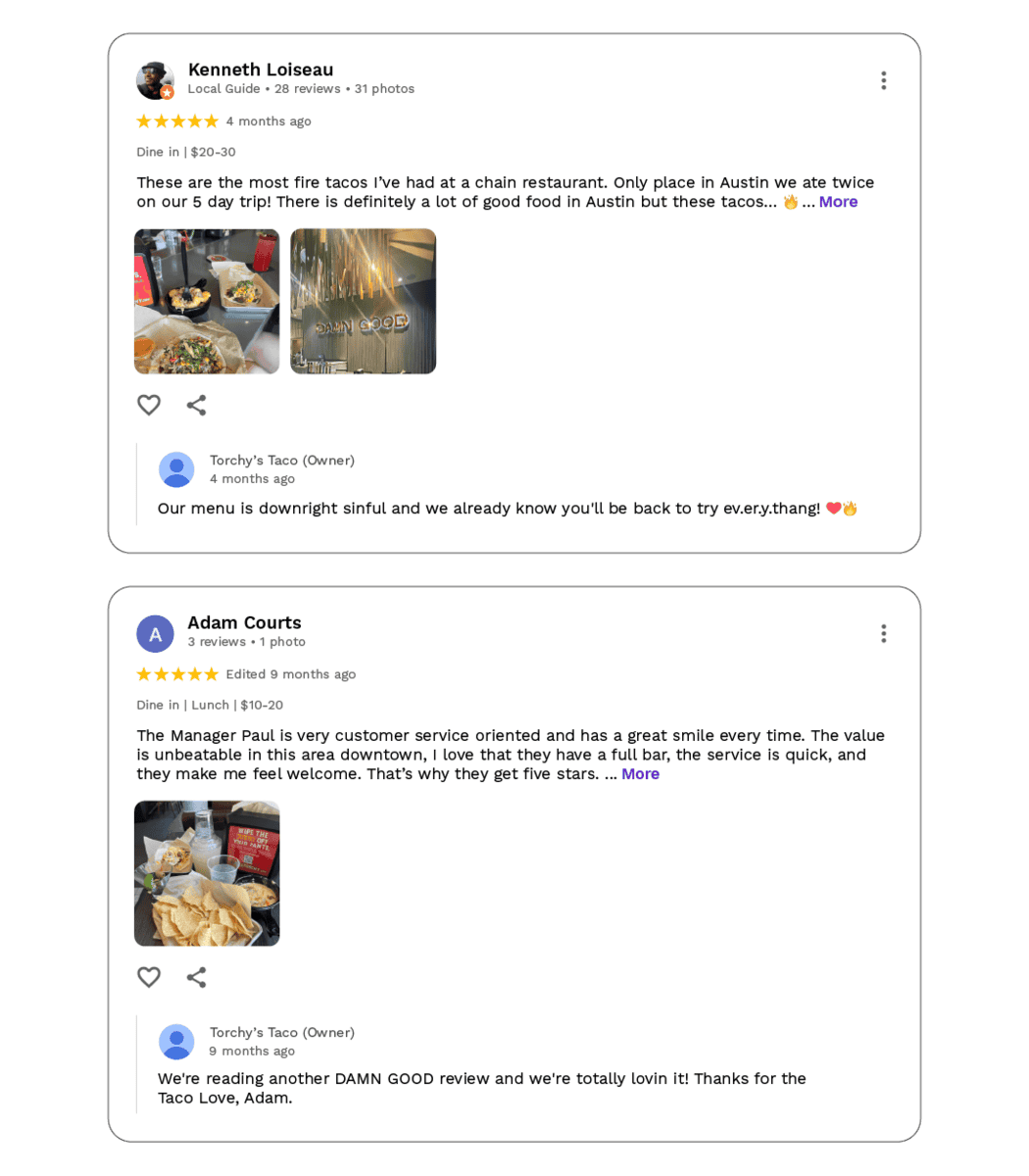
What we mean: Replies are micro-assets. When they naturally include dish names, neighborhoods, and occasions, they reinforce brand voice and help surface your locations for relevant searches.
Strategic goal
Turn every response into a tiny, on-brand content snippet that improves discoverability.
Why it matters
Consistent voice builds memory structure; natural keywords (not stuffing) support local SEO on platforms where guests actually decide.
What great looks like
- One-sentence voice cues (playful, refined, family-friendly – whatever’s true for you).
- Natural mentions of menu items, area, and use case (“date night,” “birthday”).
- Occasional brand-specific touches (e.g., lyrical, witty, hospitality-first).
Tips for execution at scale
- Maintain a voice guide with do/don’t examples and approved phrases.
- Keep a menu + locations lexicon so responders spell items and place names consistently.
- Quarterly spot-checks to prune formulaic phrasing.
3) Route Praise Into Recognition Rituals
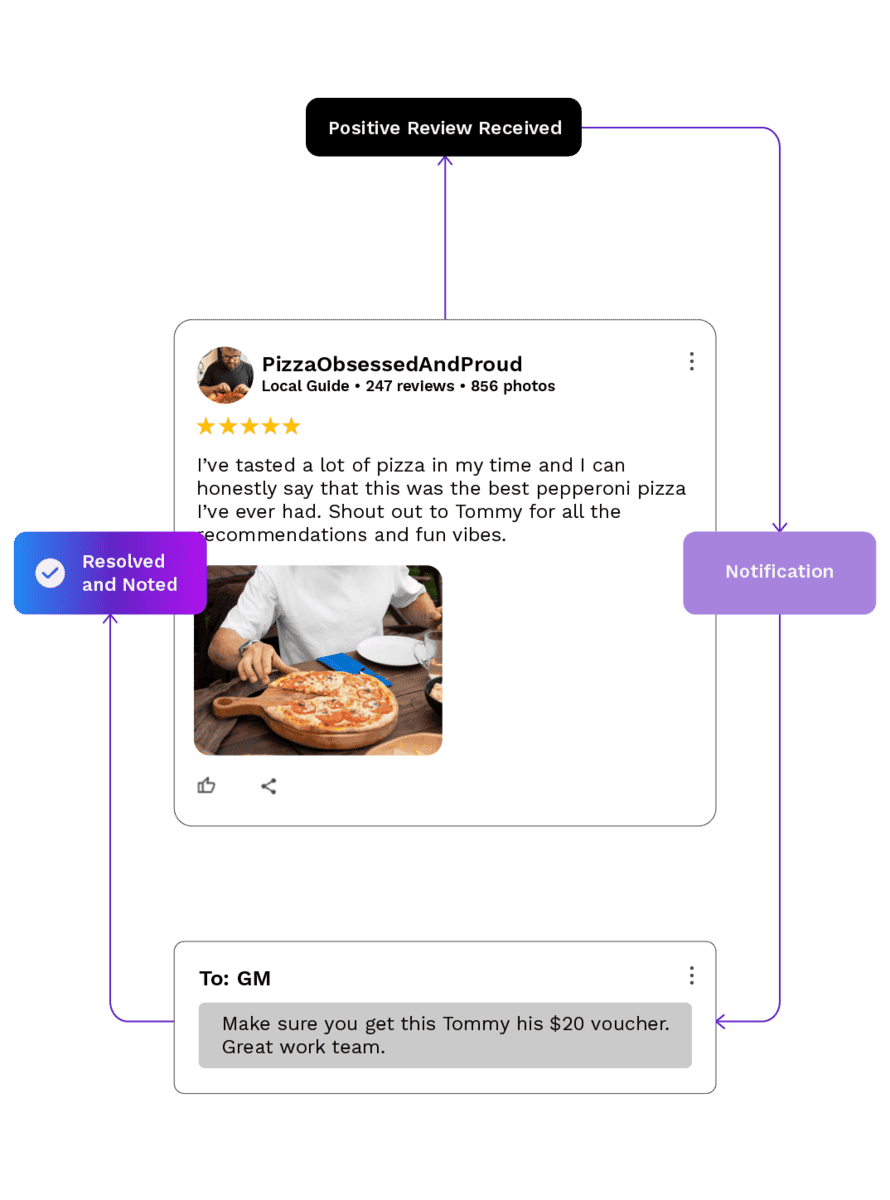
What we mean: Positive reviews should feed your culture every day. Use them to recognize team members by name and celebrate the behaviors guests notice.
Strategic goal
Reinforce high-impact behaviors and increase the odds they happen again.
Why it matters
People repeat what gets recognized. Turning guest verbatims into daily shout-outs drives consistency without heavy policing.
What great looks like
- Pre-shift readouts featuring 2–3 verbatims that name a team member and behavior.
- Simple incentives for staff mentioned in reviews (e.g., free meal until the next mention).
- Monthly or quarterly highlights across districts to keep momentum.
Tips for execution at scale
- Create a recognition channel/board that auto-pulls top mentions.
- Standardize a 3-bullet “why this worked” summary beneath each verbatim.
- Log mentions to track which behaviors correlate with rising sentiment.
4) Productize “What Great Looks Like” For Training
What we mean: Every strong review is a mini case study. Convert repeated guest-loved moments into short training modules, checklists, or micro-videos.
Strategic goal
Codify signature experiences so they survive staffing changes and growth.
Why it matters
Training that mirrors real guest language is sticky and credible. It focuses teams on what guests actually value.
What great looks like
- 60–90 second micro-videos that model the praised behavior (greeting, table talk, packaging).
- “Do it like this” snapshots tied to specific menu items or service scenarios.
- Quick checks in KDS or pre-shift to keep skills fresh.
Tips for execution at scale
- Tag positive reviews by behavior and moment; build modules only for recurring patterns.
- Retire modules that no longer map to guest praise; add new ones as trends shift.
- Include unit leaders in filming to boost buy-in.
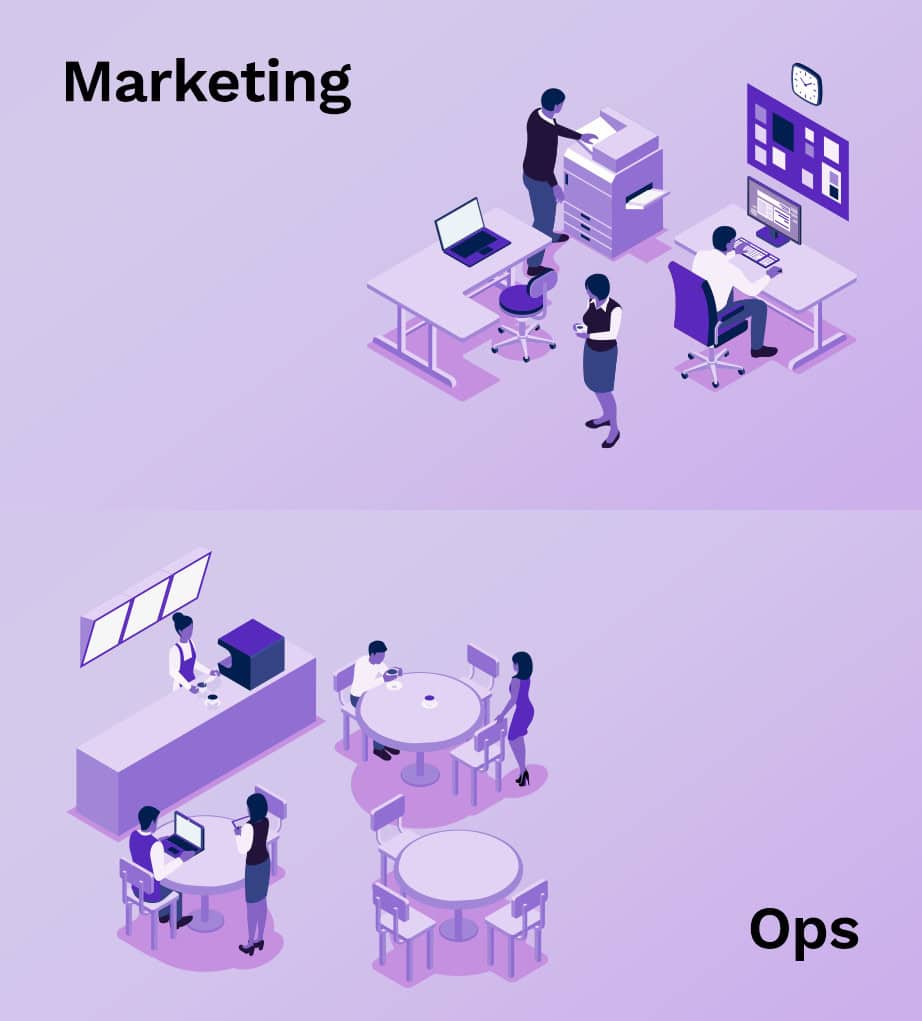
5) Clearly Define And Communicate Who Should Respond To Reviews
What we mean: Be clear on who should respond to reviews and empower them with the right guidance. Some brands have GMs respond, others centralize. Either can work but – irrespective – it relies on a clear strategy combined with a committed enablement and training process.
Strategic goal
Preserve a consistent voice and avoid low-quality replies that live forever.
Why it matters
A poor response can diminish great service. Governance avoids off-brand replies and creates consistency across your entire brand.
What great looks like
- Strategy: How you respond to reviews should be closely connected with your overall brand strategy. Creating consistency without a clear vision of how you want to be perceived in the market is – at best – hard and – at worst – impossible.
- Playbooks: scenarios for short/long praise, star-only reviews, UGC-style posts.
- Quality reviews: monthly audits by marketing + ops.
Tips for execution at scale
- Provide a style card with examples and banned phrases.
- Build an internal reply library of your top 25 responses.
- Leverage AI trained in your brand voice to provide personalized and unique responses.
- Run frequent workshops with real examples and light coaching.
6) Use Soft CTAs To Nurture The Next Visit
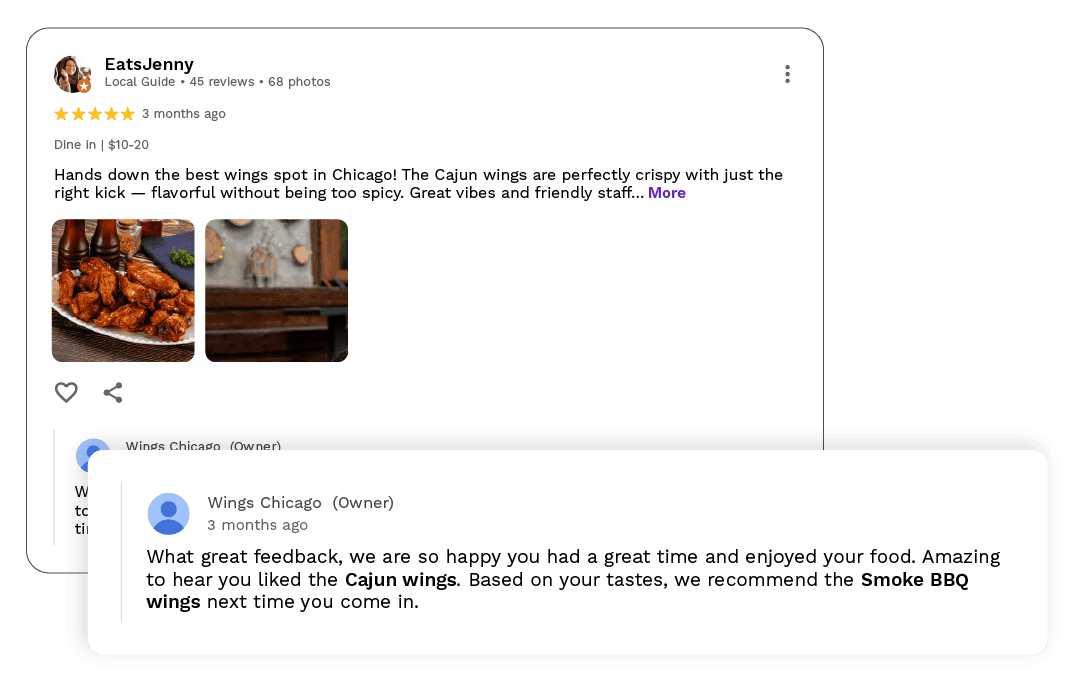
What we mean: Positive replies can lightly invite the guest back or point to something they’d likely love next time. Keep it helpful, not salesy.
Strategic goal
Turn goodwill into the guest’s next great experience.
Why it matters
Context-aware invitations (e.g., “If you loved X, try Y on your next visit”) feel like hospitality, not upsell.
What great looks like
- Occasion-savvy nudges (date night, family brunch, group games day).
- Loyalty signposts when appropriate (“We’d love to see you join… if you’d like”).
- Seasonal tie-ins only when they naturally fit what the guest praised.
Tips for execution at scale
- Maintain a CTA menu mapped to items/occasions; keep them optional.
- Train responders to skip the CTA when the thank-you already feels complete.
- Track if soft CTAs increase return-visit indicators.
7) Publish Social Proof Where It Helps Guests Decide
What we mean: Repurpose the best reviews (with permission and platform rules in mind) across Google Business Profiles, your website, and social.
Strategic goal
Make it easier for new guests to choose you by showcasing authentic praise.
Why it matters
Crowd signals reduce decision friction. Real language from real guests beats ad copy.
What great looks like
- A rotating “Guests say…” module on location pages.
- Screenshot-style posts highlighting specific dishes or hospitality moments.
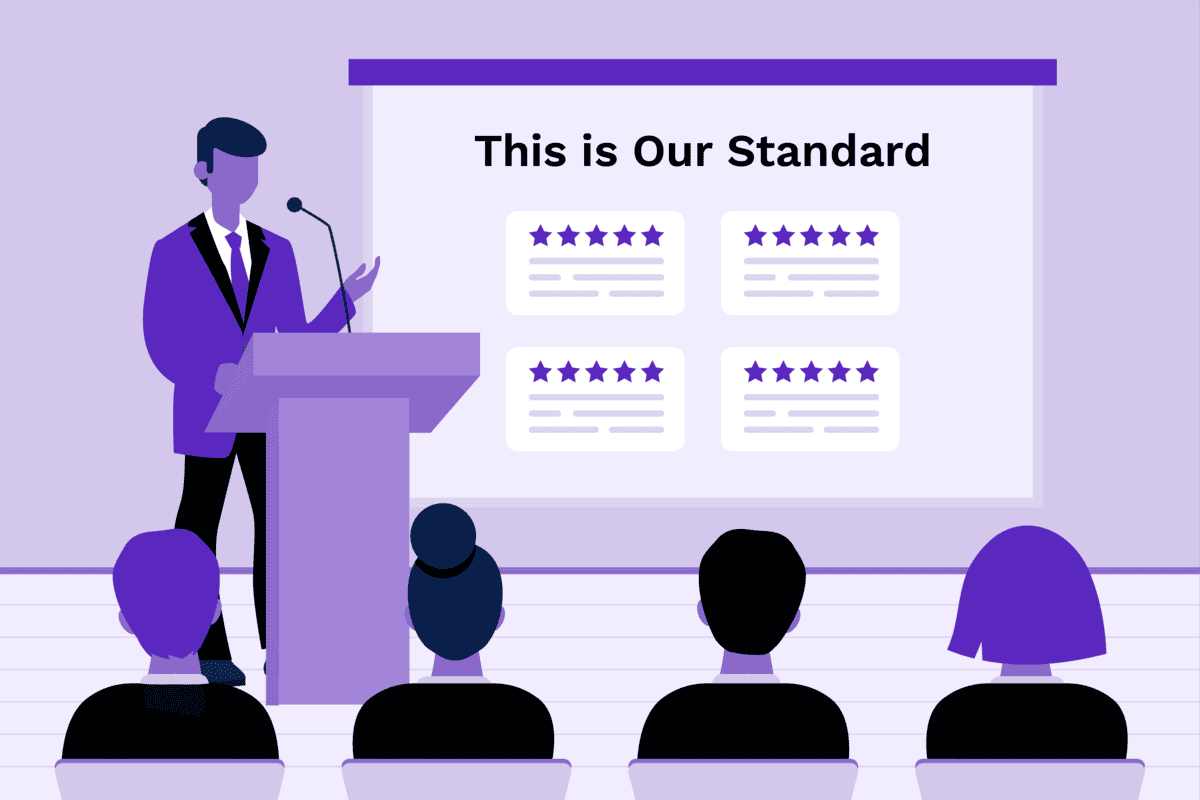
- Internal “this is our standard” slides that double as recruiting content.
Tips for execution at scale
- Create a rights-use checklist and keep reviewer permissions on file when needed.
- Standardize a visual template so repurposed reviews look consistent.
- Refresh to avoid staleness.
8) Measure Coverage, Speed, And Signal—Not Vanity
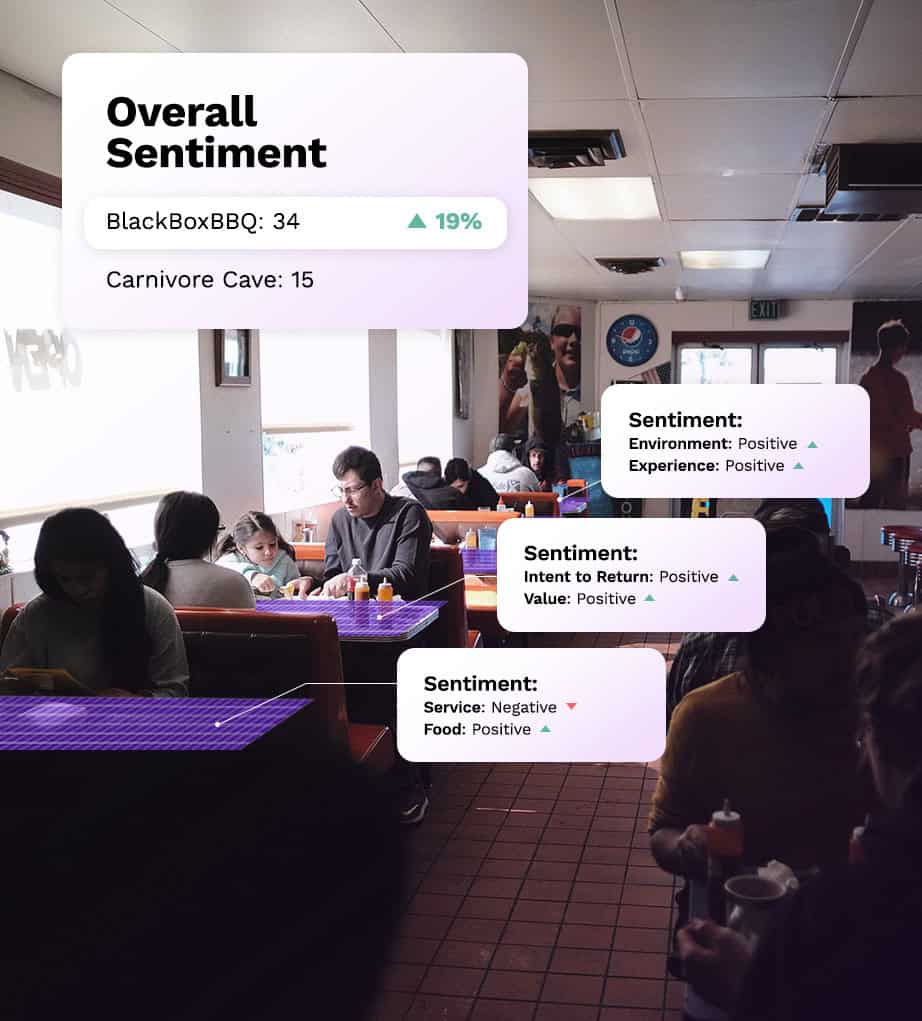
What we mean: Track whether you’re replying to positives quickly and whether those positives are teaching you anything useful. Avoid chasing average star rating at the expense of learning.
Strategic goal
Ensure the program is responsive and insight-rich.
Why it matters
You get what you measure. Coverage and speed show responsiveness; topic signals show where to double-down.
What great looks like
- Coverage rate of positive reviews (by site, unit).
- Time-to-thank (median, 90th percentile).
- Top praised themes mapped to dishes, dayparts, and behaviors.
Tips for execution at scale
- Review theme shifts monthly; invest in rising winners.
- Share top-five praise themes with culinary, ops, and marketing.
- Avoid gaming metrics; keep focus on repeatable guest wins.
Conclusion: Amplify Delight, Eliminate Friction—Run Both Frameworks Together
Your Responding to Positive Restaurant Reviews program should be viewed as a growth engine: fast thanks, digital hospitality, voice-true replies, and daily recognition that turns great moments into muscle memory.
Your negative review program is the risk-reduction system: fast acknowledgment, clear ownership, design-level fixes, and public accountability.
Operate both deliberately. You’ll reinforce what guests love, remove what they don’t, and ship a brand experience that makes your marketing not just believable – but obvious.