Restaurant Performance: Best vs Rest Analysis
How Top Brands Set Their People Up for Success
In our “Best vs. The Rest” series, we are decoding the DNA of the industry’s top performers. In addition to how they manage feedback, prioritize GM retention and how they adapt to value, they also make sure they set their people up for success.
Level-Setting
In the restaurant industry, the link between a stabilized workforce and financial performance is undeniable. We know that high turnover kills margins—costing nearly $3,000 to replace an hourly employee and over $17,000 for a GM.
But when we analyze the top 25% of performing brands—those defying the industry’s traffic and sales trends—we see they aren’t just “hiring better.” They are structurally setting their teams up for success from minute one.
Here, we look at the specific training and onboarding behaviors that separate the market leaders from the pack. The data is clear: investment in your people is directly correlated to traffic growth and retention.
Here is what the top performers are doing differently.
They Don’t Rush “Day One”
In a tight labor market, the temptation is to get a new hire onto the floor as fast as possible. The data suggests this is a mistake.
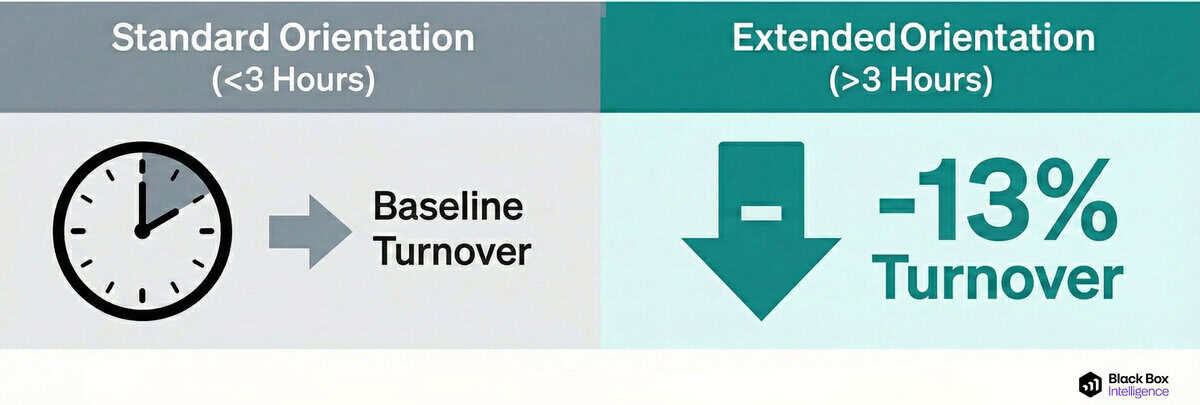
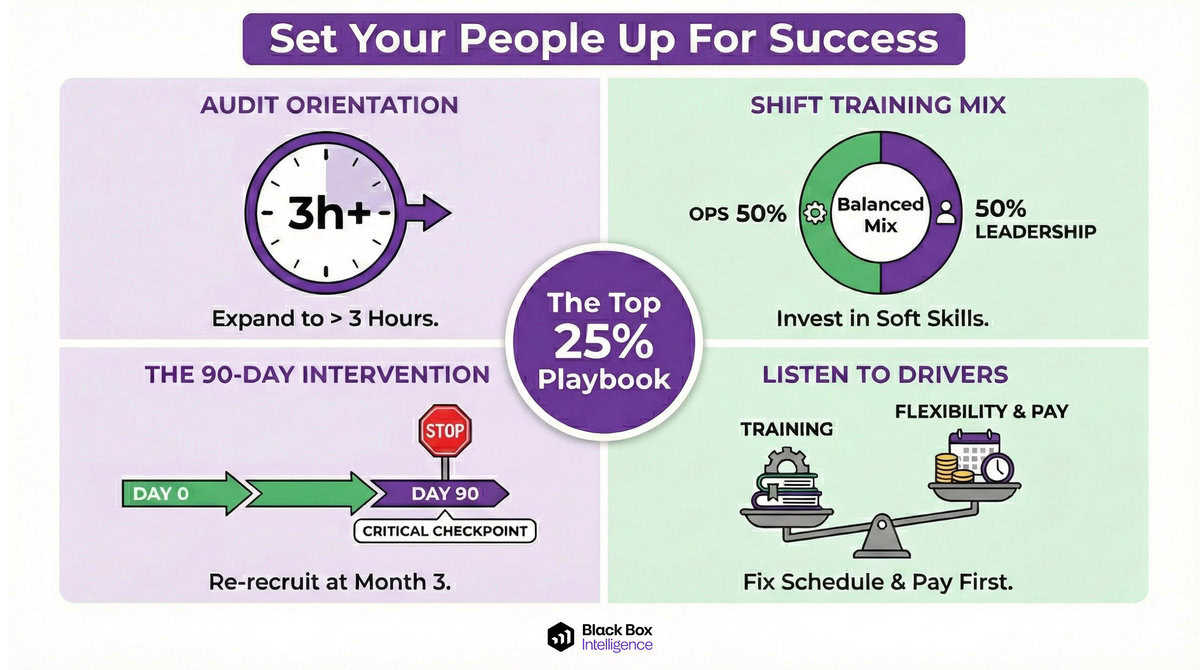
Top-performing Full Service brands are investing heavily in the very first interactions an employee has with the company. Brands that offer more than 3 hours of new hire orientation see 13% lower non-management turnover compared to their peers.
The reality is orientation is not just paperwork. It is cultural assimilation. The brands winning the retention game are using those first few hours to build engagement, not just check compliance boxes.
They Invest in Incumbents, Not Just New Hires
Training often stops once an employee is “certified.” The top performers, however, treat training as an ongoing retention tool, not a one-time onboarding cost.
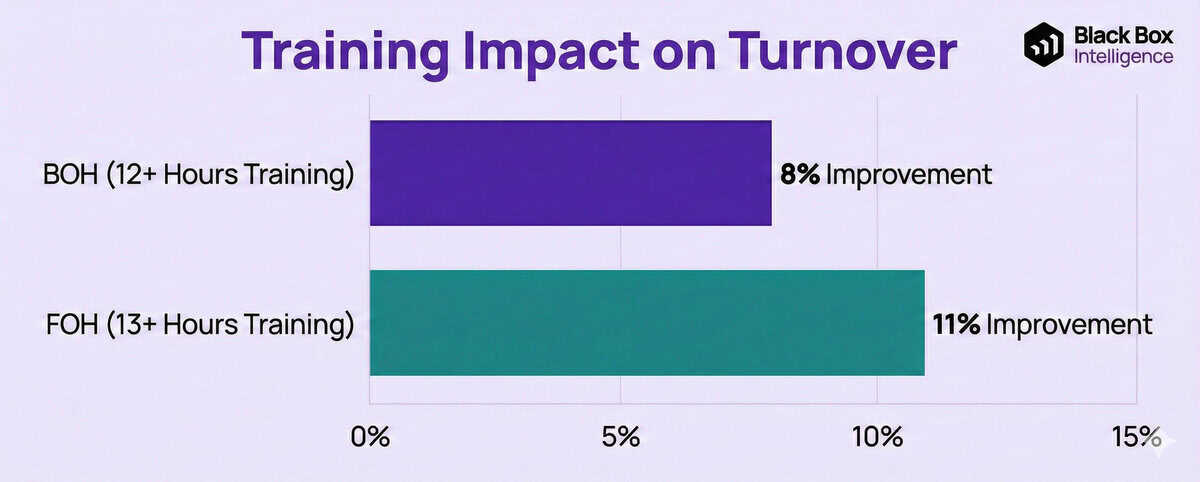
For Full Service brands, there is a distinct correlation between ongoing training hours for existing employees and lower turnover:
-
Back of House (BOH): Providing over 12 hours of ongoing training correlates to 8% better turnover.
-
Front of House (FOH): Providing over 13 hours of ongoing training correlates to 11% better turnover.
The “Best” brands understand that mastery drives satisfaction. When employees feel competent and invested in, they stay.
They Train Managers on Leadership, Not Just Operations
Perhaps the most striking data point connects manager training directly to traffic growth.
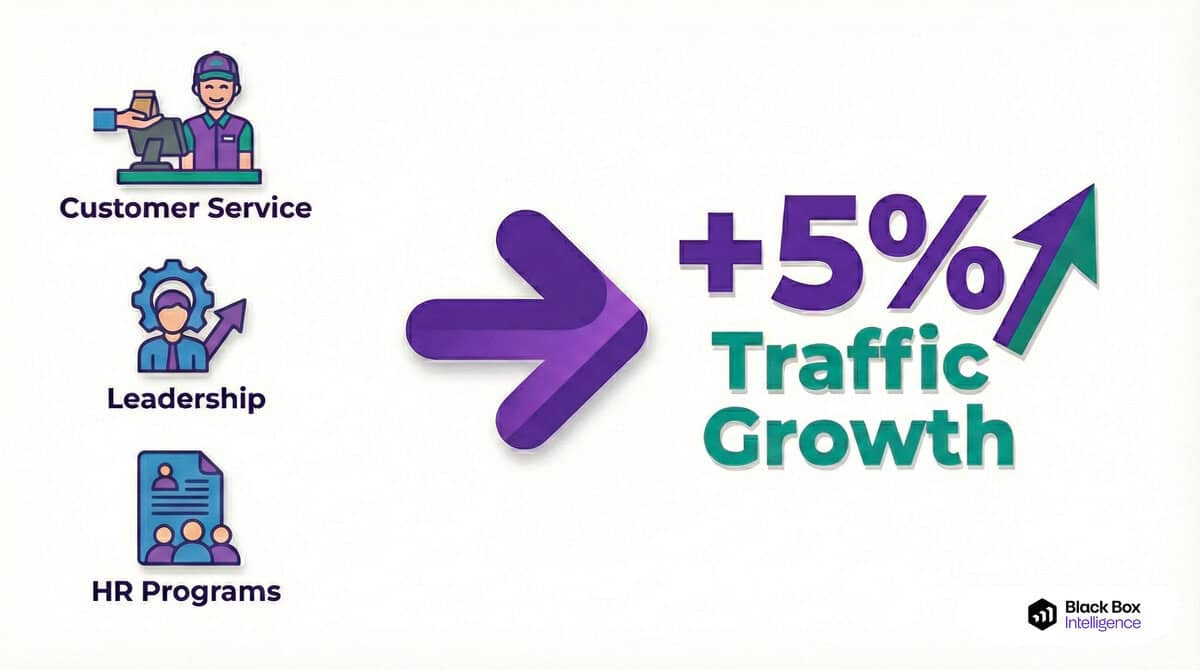
We found that companies allocating more manager training time to “soft skills”—specifically Customer Service, Leadership Development, and HR Programs—saw 5% better traffic growth than their competitors.
While operational training (inventory, scheduling, food safety) is table stakes, the top 25% are teaching their managers how to lead people and manage guests. This directly translates to the guest experience, driving repeat visits and positive word of mouth.
They Structure Onboarding Around the “100-Day” Cliff
Retention is not linear, and the “danger zone” shifts as a new hire settles in. The data reveals a critical drop-off even after an employee seems stable.
-
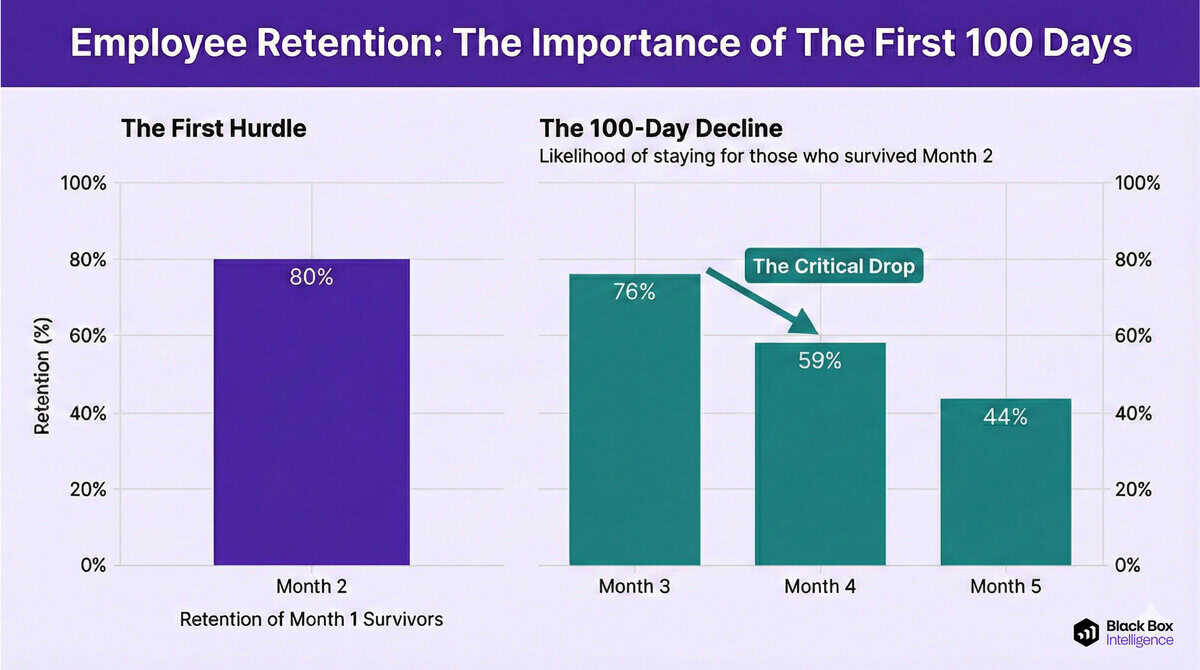
The First Hurdle (Month 1–2): There is relative stability early on. 80% of employees who make it past their first month will stay for a second.76% of employees who survive the first month will stay for a second.
-
The Drop-Off (After Month 2): For those who survive the second month, the likelihood of long-term retention plummets rapidly.
-
Until Month 3: 76% chance of staying.
-
Until Month 4: 59% chance of staying.
-
Until Month 5: 44% chance of staying.
-
The restaurant industry is a notoriously high turnover industry so some churn is inevitable – even for the best operators. But the data proves – time and time again – that lower turnover equals better traffic and sales performance.
The top operators focus their retention efforts intensely on this first 100 days. If you can get an employee past the fourth month, you have likely secured a long-term team member. If you ignore them after week two, they’ll probably become a statistic by month four.
The Black Box Intelligence Point of View
The data proves that “setting people up for success” isn’t just a nice HR slogan, the reality is it’s a financial growth strategy. Here is our recommendation for brands looking to replicate the success of the top 25%:
-
Audit Your Orientation: If your new hire orientation is under 3 hours, expand it. Use that time to sell the brand vision, not just the employee handbook.
-
Shift Manager Training Spend: Review your Learning & Development (L&D) curriculum. If it is 90% operational, you are missing the traffic-driving benefits of leadership and service training. Try to better balance the mix.
-
Implement a “90-Day Check-In”: Since the drop-off accelerates around month 3 and 4, implement a structured stay-interview or check-in at the 90-day mark to re-recruit your new hires.
-
Listen to What They Want: While training is crucial, the top factors for reducing hourly turnover remain flexibility and predictability in scheduling and pay adjustments. You cannot train your way out of a bad schedule or uncompetitive pay.
Note on Methodology: When we refer to “The Best,” we are isolating the top quartile of brands or units based on year-over-year traffic growth relative to their segment and market (DMA) peers. This data doesn’t rely on anecdotes; it is strictly defined by performance metrics within the Black Box Intelligence network.
Learn More About Top Performers
Deep Dive into More Behaviors of Top 25% Restaurant Performers
Return to Best vs Rest main menu or read other articles below.

Restaurant Performance Management
Close The Gap
The Black Box Intelligence Restaurant Performance Network provides the ground-truth data you need to stop guessing and start executing. Build your own path to outperformance.
