Monthly Restaurant Trends Review
Out of the Box: June 2026
-
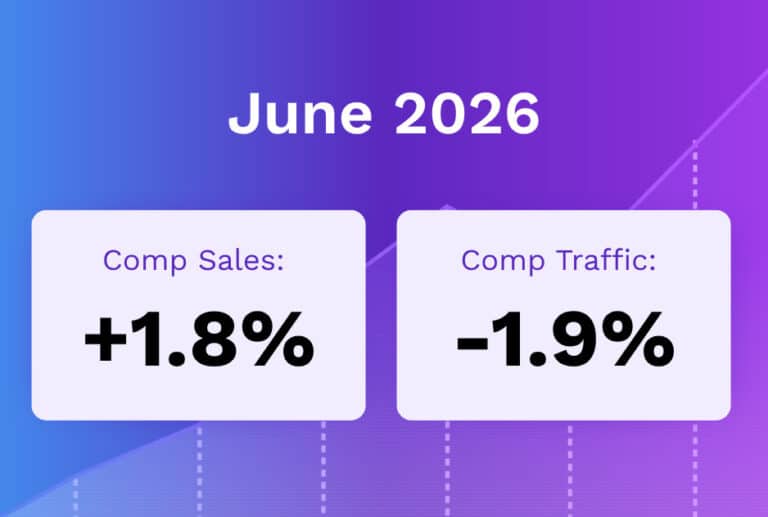
Resilient Sales: Comparable sales growth reached 1.8% in June while traffic modestly improved to -1.9%, driven by sustained higher average check sizes.
-
Segment Polarization: Upscale Casual led industry growth through experiential trade-ups, while steep check growth continued to pressure Family Dining and Fine Dining.
-
Regional Dynamics: All regions maintained positive sales growth, with California claiming the top spot from event tourism while gas prices weighed on the Southeast.
-
Labor Baseline: Full Service turnover rates continued to improve below pre-pandemic levels, supporting a stable, moderating outlook for the second half of 2026.


Executive Insights: Consumer Resilience Holds Sales Steady as Check Growth Offsets Traffic Friction
In this Issue:
-
The Big Picture: June 2026 Sales and Traffic Trends
-
Segment Focus: Fine Dining
-
Best vs Worst: Region and Segment
-
Staffing Review: Limited Service Restaurants, Management
June 2026 Restaurant Industry Trends
The Big Picture: Sales and Traffic Trends
June Restaurant Performance: Consumer Resilience Defies Rising Inflation
Inflationary pressures continued to build in June, yet restaurant demand remained remarkably resilient. Consumer prices have climbed steadily since March, reaching their highest levels in two years during May as energy costs surged, with the Consumer Price Index reporting 23% year-over-year growth in energy prices. Under normal circumstances, this level of inflation would be expected to weigh heavily on discretionary spending.
Instead, restaurant data suggests consumers continue to prioritize dining out, absorbing higher costs while making only modest adjustments to their restaurant habits. Restaurant data continues to show consumers are protecting restaurant occasions despite growing pressure on household budgets.
By the Numbers: Sales Remain Strong While Traffic Continues to Stabilize
June’s performance continued the pattern seen throughout 2026.
-
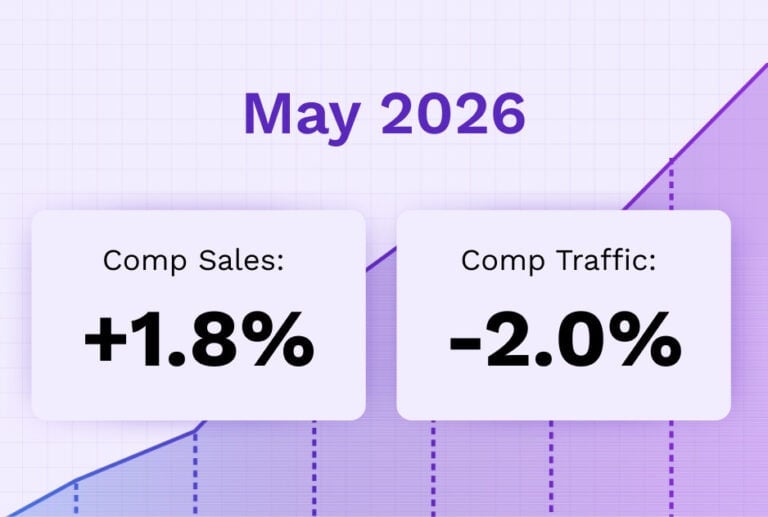
Same-store traffic growth: -1.9%, improving 0.1 percentage points from May.
-
Same-store sales growth: 1.8%, tying February and May as the strongest performance of the last ten months.
Check Growth Continues to Offset Soft Traffic
Although the industry continues to lose guests year over year, June’s modest traffic improvement suggests consumer demand remains resilient despite intensifying inflationary pressures. The stronger sales performance continues to be driven by higher average checks rather than increased guest counts.
The Bottom Line: Consumers continue to prioritize restaurant spending despite mounting inflationary pressures. However, the widening gap between sales and traffic confirms that check growth—not increased guest frequency—is driving industry performance.
| Month | July ’25 | Aug | Sep | Oct | Nov | Dec | Jan ’26 | Feb | Mar | Apr | May | June |
|---|---|---|---|---|---|---|---|---|---|---|---|---|
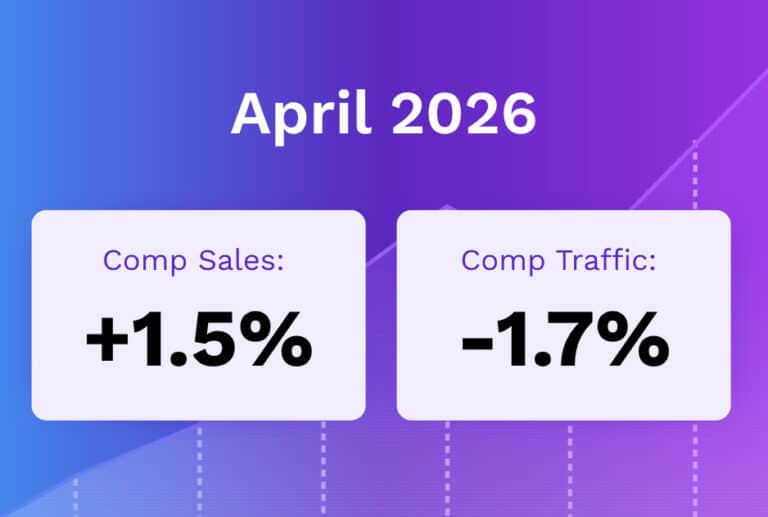
| Comp. Sales | +2.4% | +2.3% | +1.1% | +0.7% | +0.0% | -1.0% | +1.0% | +1.6% | +0.7% | +1.5% | +1.8% | +1.8% |
| Comp. Traffic | +0.1% | -0.2% | -1.5% | -2.0% | -2.9% | -3.3% | -1.1% | -2.0% | -2.3% | -1.7% | -2.0% | -1.9% |
Note: These numbers have been modified slightly following a benchmark recalibration.
June 2026 Restaurant Segment Performance
Best vs Worst: Restaurant Industry Segment
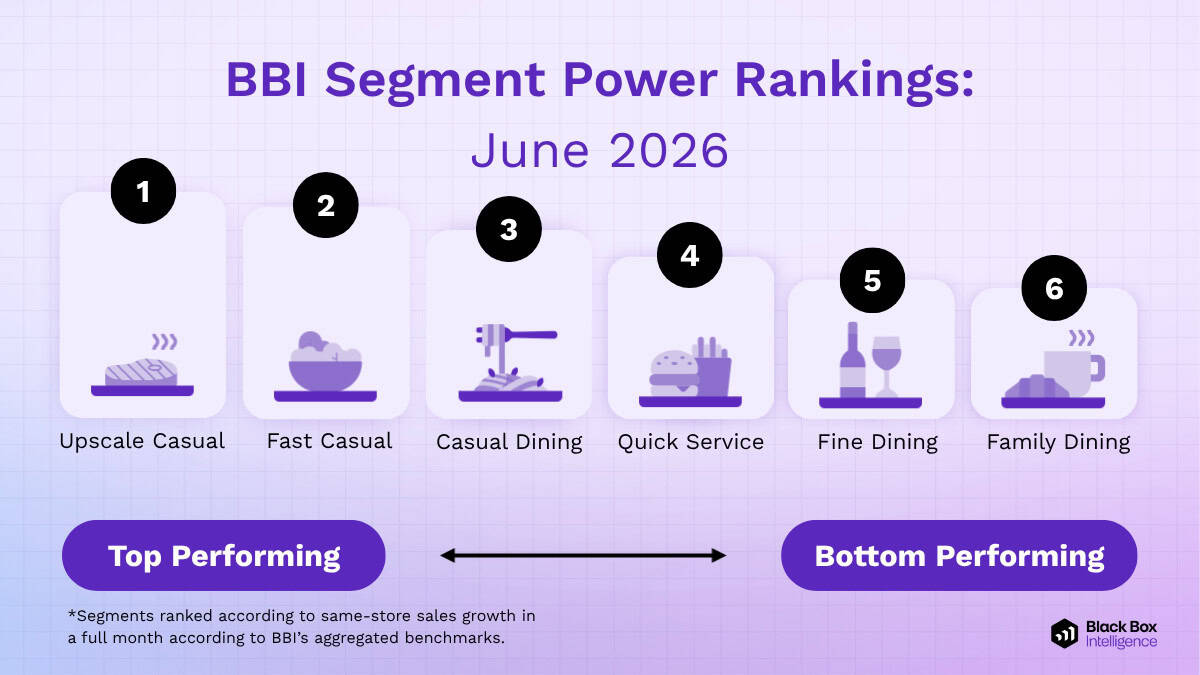
Segment Performance: Upscale Casual Extends Its Lead as Family Dining Falls Further Behind
June delivered mixed results across restaurant segments. Fast Casual experienced the strongest acceleration in year-over-year same-store sales growth, followed by a stabilizing Fine Dining. Meanwhile, Upscale Casual and Casual Dining saw their annual same-store sales growth soften compared to May.
Upscale Casual Continues Its Resurgence
Despite the slowdown, Upscale Casual remains the industry’s top-performing segment based on same-store sales growth. Some of its recent strength may reflect lapping relatively soft results from the same period last year.
But the segment may also be benefiting from changing consumer behavior as inflation pressures household budgets. Guests could be skipping some restaurant occasions to trade up to the “affordable luxury” of a more elevated dining experience. Continued strength among higher-income consumers, supported by the wealth effect from a strong stock market, has likely reinforced this trend.
Family Dining Faces Growing Pressure
At the opposite end of the performance spectrum, Family Dining continues to struggle. It remains the worst-performing segment based on year-to-date sales growth and is the only segment experiencing declining same-store sales in 2026.
One factor weighing on performance has been exceptionally high average check growth, which can become a barrier to traffic. After posting the second-highest check growth over the previous two years, Family Dining has led the industry in average spending per guest during the first half of 2026.
For a segment that primarily serves middle- and lower-middle-income consumers, persistent inflation and rapidly rising menu prices may be driving more guests to trade down to Quick Service and Fast Casual.
The Bottom Line: June’s segment performance reinforces two distinct consumer behaviors: guests continue to seek elevated dining experiences through Upscale Casual, while value-conscious consumers are increasingly trading down from Family Dining as inflation and menu prices remain elevated.
June Restaurant Performance: Region Focus
Best vs Worst: Region
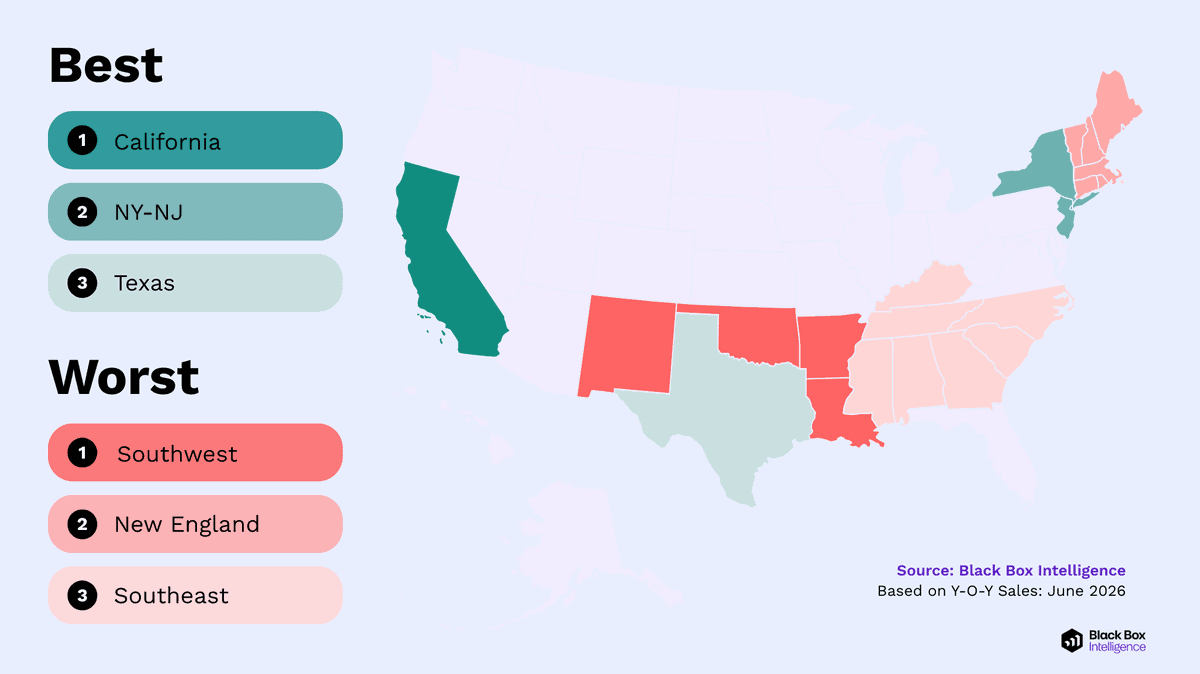
Regional Performance: Broad Resilience Holds Across All Regions
The industry’s resilience remained evident across the country in June. Every region has posted positive same-store sales growth each month since March despite sharply higher gas prices. However, regional performance continues to vary widely, with California emerging as an unexpected leader while the Southeast remains mired near the bottom of the rankings.
California Reaches the Top
California was the top-performing region based on same-store sales growth in June—a rare achievement outside of the winter months.
- Easy Comparisons: California was the only region to post negative same-store sales growth in June 2025, creating a favorable comparison
- World Cup Boost: With two host cities welcoming thousands of visitors beginning June 11, the FIFA World Cup likely provided an additional lift to restaurant sales.
The Southeast Continues to Lag
The Southeast has remained one of the industry’s weakest-performing regions, ranking last in same-store sales growth during three of the last five months and among the bottom three in the other two. The region’s weakness began before energy prices surged, but higher gas costs have likely added another layer of pressure.
- Persistent Weakness: Sales performance has lagged since February, suggesting broader regional challenges beyond fuel prices.
-
Higher Fuel Costs: Four of the region’s seven states rank among the top 10 for the largest increases in average gas prices since March, both in absolute dollars and percentage terms.
Restaurant Segment Deep Dive: June 2026
State of Restaurant Segment Performance: Fine Dining
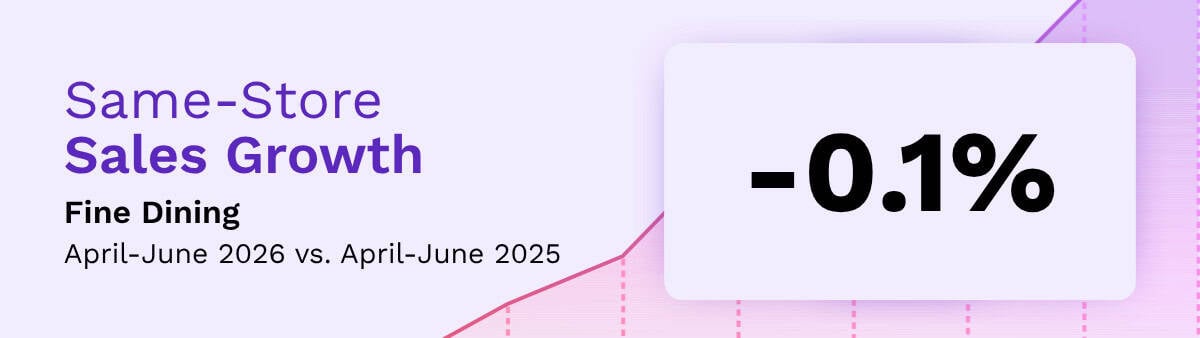
Fine Dining: Luxury Spending Faces a Reality Check
Along with Family Dining, Fine Dining has continued to face difficulties in recent months. Unlike Family Dining, however, which has been struggling for a longer period, Fine Dining’s performance has fluctuated considerably.
From Top Performer to Bottom Performer
The segment ranked among the two worst-performing in the industry between March and June of this year, after being among the two strongest-performing segments based on sales growth from October through February.
Corporate Dining Faces Headwinds
Rising inflation and growing macroeconomic concerns driven by the conflict in Iran may have created a business climate conducive to belt-tightening when it comes to corporate budgets. This environment may be leading to cutbacks in business dining, an important component of the Fine Dining business model.
Special Occasion Trade-Downs
Additionally, consumers for whom Fine Dining was more of a rare luxury may be trading down those special occasion dining instances to more elevated Upscale Casual brands that can provide some of the experience at a much more budget-friendly price point.
The Bottom Line: Fine Dining remains vulnerable to today’s cautious spending environment. Until inflation moderates and business confidence improves, the segment is likely to continue facing pressure from reduced corporate dining and consumers trading down to more affordable premium experiences.
State of Restaurant Workforce in 2026
Go Deep on the Latest Workforce Trends with Our Comprehensive Annual Research Study
Staffing, Workforce, And Employment Focus
Current Turnover Trends in Full Service Restaurants
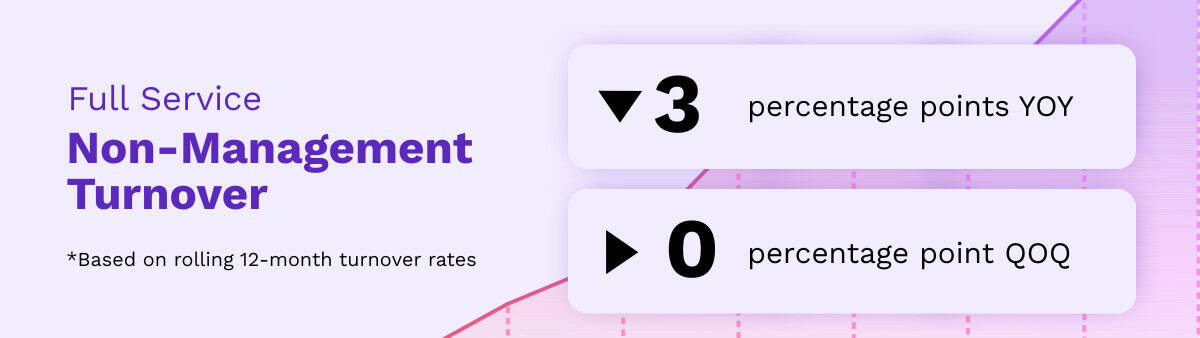
Turnover Improvements Reach a New Baseline
In addition to restaurant guests remaining resilient despite the many challenges they face, restaurants are also continuing to see positive trends in employee staffing. Turnover rates for both managers and non-management employees have improved in recent years and remain below pre-pandemic levels.
Hourly Turnover Levels Off
For hourly, non-management employees in Full Service restaurants, rolling 12-month turnover rates declined by 3.2 percentage points as of May compared to the same period a year ago.
However, as has also been observed in Limited Service restaurants, it appears the largest retention gains may now be behind us. Rolling 12-month turnover rates for non-management employees in Full Service restaurants were unchanged quarter over quarter as of May compared to Q1.
Why Lower Turnover Matters
These lower turnover rates are welcome news for restaurant operators. Replacing a single employee can cost almost $3,000, according to Black Box Intelligence’s 2026 Total Rewards Survey. Those costs include employee separation, recruiting and hiring a replacement, and the training associated with onboarding a new staff member.
Better Retention, Better Guest Experience
Beyond the direct cost savings, restaurants also benefit from having a higher percentage of tenured, fully trained employees serving guests. Given these improvements in retention, it is not surprising to see that guest sentiment around restaurant food and service has been rising in recent years.
Our Take on State of the Restaurant Industry in June 2026
BBI Says…
There are plenty of reasons why we could be seeing a major downturn in restaurant sales and traffic. For starters, the average inflation over the last three months has been the highest during any consecutive three-month period going back to June 2023. What makes this inflationary period especially tough is the fact that much of that inflation is coming from necessities that are difficult or impossible to control. For example, gas prices were up almost 41% year over year in May, while paying for shelter, which is a sizeable component of most consumers’ budgets was up 3.4%. As a result, any gains in compensation have been erased by inflation recently, and disposable personal income adjusted for inflation is now lower than it was a year ago.
At the same time, we are seeing plenty of signs of consumer distress. Delinquency rates for credit cards and auto loans are on the rise and have hit their highest levels in fifteen years. Savings rates are down as people need to spend more of their income to keep up their current lifestyles. Perhaps most alarming, the rate at which people are withdrawing money from their 401Ks under hardship is also rising rapidly.
According to the New York Fed Survey of Consumer Expectations, 42% of consumers said in June that their household financial situation is worse than it was a year ago. The outlook for the future is not much brighter, with 34% of consumers expecting their financial situation to be worse a year from now.
“In this environment, it would be logical to believe restaurant spending would be among the first to be cut. After all, prices in restaurants continue to rise faster than prices for food at grocery stores. Yet despite all of these challenges, we continue to see steady same-store sales performance for restaurants since March. This latest downturn from a consumer perspective has helped reinforce the hypothesis that restaurant spending is much more ingrained in consumers than it used to be, and how much they are willing to protect that spending.”
Consumers may be skipping some restaurant visits and takeout orders, but the amount being spent at restaurants continues to grow. However, that doesn’t mean that everybody is winning and experiencing growth in the industry. As consumers watch their wallets more closely, they are becoming pickier, and their expectations are growing. They may be willing to trade some transactional dining occasions for more experiential ones, and spend more per occasion when doing so. Dining out, after all, remains that affordable luxury that most can enjoy at their own comfortable price point. But if there is one thing that remains true—and Black Box Intelligence’s data continues to back it up—it is that regardless of the price point, the one thing that most sets apart top performing brands from the rest is delivering a better sense of value to their guests.
Our expectation is for a reasonably stable second half of the year, with same-store traffic growth remaining negative but relatively flat, and check growth moderating somewhat as inflationary pressures subside, putting less pressure on menu price increases and facilitating the continuation of promotional discounting as a vehicle for driving value to guests. Same-store sales growth may decelerate as a result, but it will likely be a moderation and not a nosedive of the current sales trends. After all, guests have been telling us with their dollars since March that they love restaurants, even when things get tough.

Victor Fernandez
Chief Insights Officer
Black Box Intelligence
State of Restaurant Industry
Quarterly Webinar Deepdives
We go into way more detail in our flagship quarterly State of the Industry (SOTI) webinar – our definitive take on the latest developments and a must attend for anyone in the restaurant industry.